DXB

Dubai International Airport

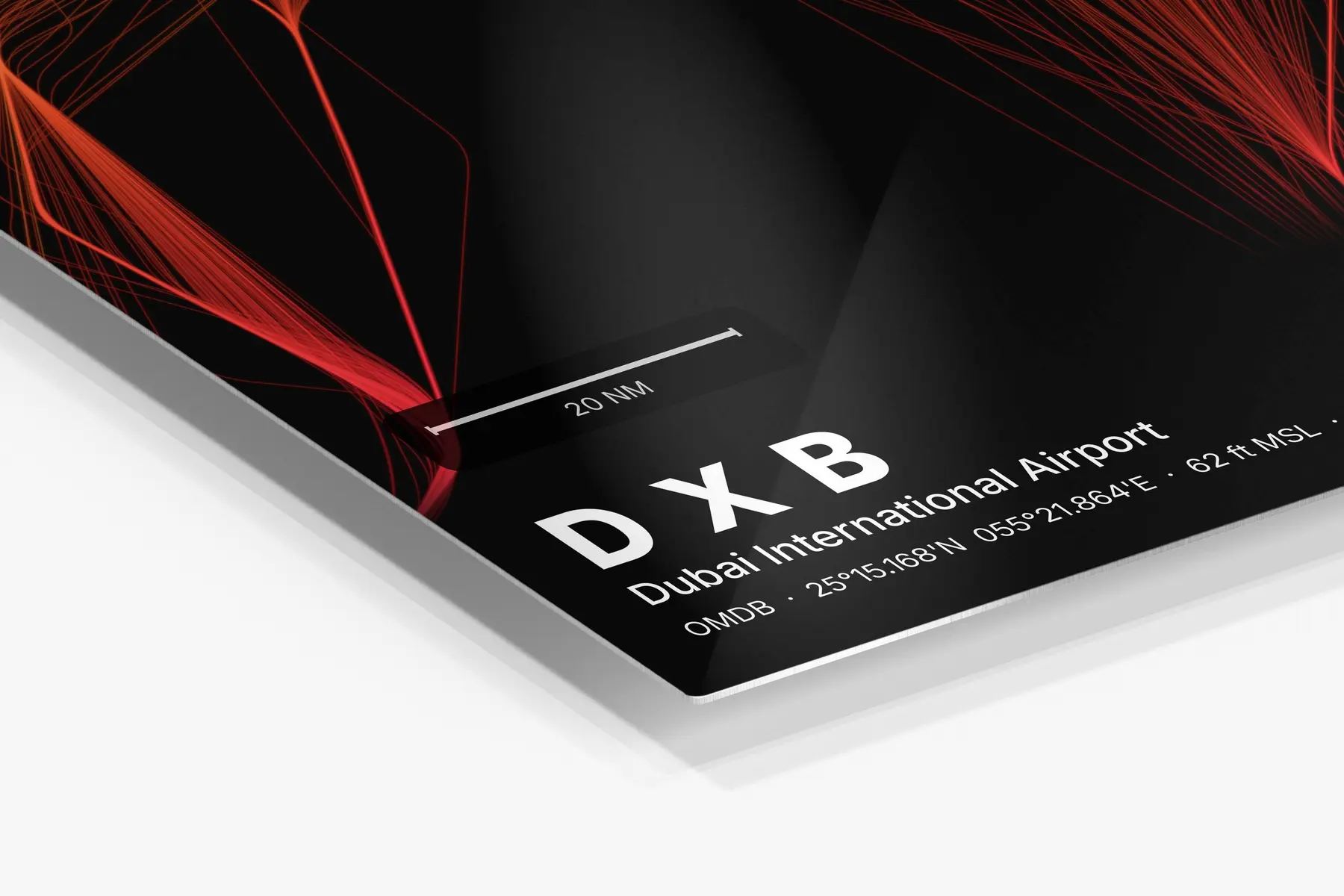
Dubai International Airport (DXB) is one of the world's busiest international hubs, linking Europe, Asia, Africa, and the Americas across a single connected node in the Arabian Gulf. This metal print captures that reach — built from real ADS-B flight tracking data. Every path is colorized by altitude across your chosen palette.

This print visualizes all 3,447 flights recorded from September 30 to October 6, 2025 — the 65th anniversary of the airport's opening for commercial operations. Printed direct-to-metal on an aluminum panel, it is a piece of aviation wall art that turns one of history's great crossroads into something you can own.

DXB flight path print — Inferno theme · Dark in living-room setting [hotspot:46]DXB flight path print — Inferno theme · Dark in office setting [hotspot:55]DXB flight path print — Solana theme · Dark in living-room setting [hotspot:46]DXB flight path print — Solana theme · Dark in office setting [hotspot:55]DXB flight path print — Citrus theme · Dark in living-room setting [hotspot:46]DXB flight path print — Citrus theme · Dark in office setting [hotspot:55]DXB flight path print — Blossom theme · Dark in living-room setting [hotspot:46]DXB flight path print — Blossom theme · Dark in office setting [hotspot:55]DXB flight path print — Prism theme · Dark in living-room setting [hotspot:46]DXB flight path print — Prism theme · Dark in office setting [hotspot:55]DXB flight path print — Inferno theme · Light in living-room setting [hotspot:46]DXB flight path print — Inferno theme · Light in office setting [hotspot:55]DXB flight path print — Solana theme · Light in living-room setting [hotspot:46]DXB flight path print — Solana theme · Light in office setting [hotspot:55]DXB flight path print — Citrus theme · Light in living-room setting [hotspot:46]DXB flight path print — Citrus theme · Light in office setting [hotspot:55]DXB flight path print — Blossom theme · Light in living-room setting [hotspot:46]DXB flight path print — Blossom theme · Light in office setting [hotspot:55]DXB flight path print — Prism theme · Light in living-room setting [hotspot:46]DXB flight path print — Prism theme · Light in office setting [hotspot:55]

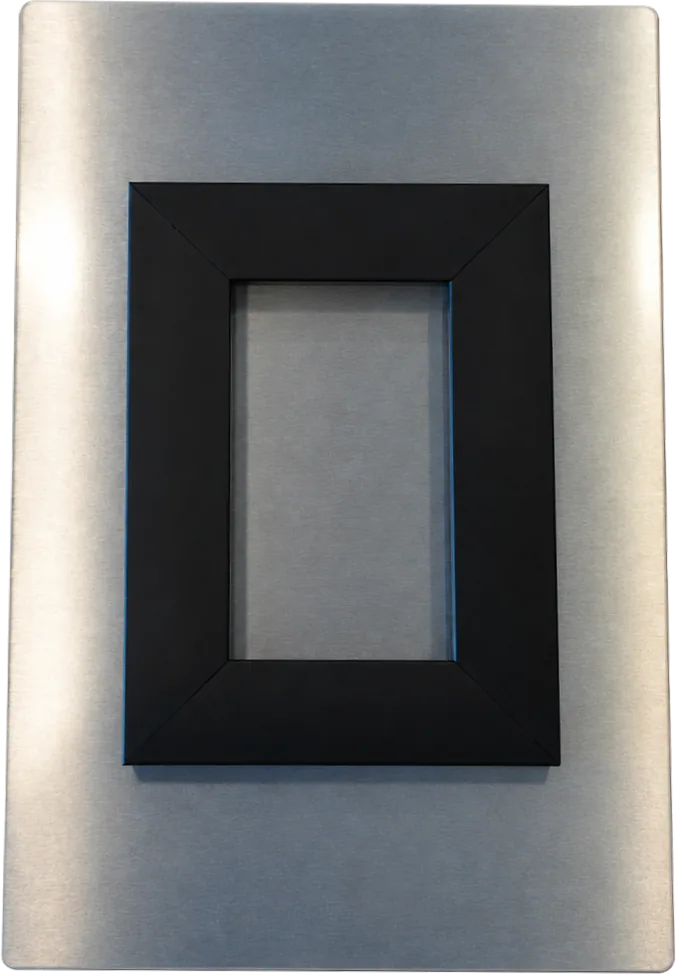
Dye-sublimated on aluminum · Float mount hardware included

$119

Made to order in 2–3 daysMade in the USA
Behind the Print

Every ADS-B-tracked flight visualized in this print — captured over 7 days.

3,447

Total Flights

1,003

Unique Aircraft

1,184,394

ADS-B Points

DXB logged 3,447 flights across seven days from September 30 to October 6, 2025, averaging 492 movements per day and 20.5 per hour. Arrivals dominated the capture window heavily, accounting for 3,229 of those flights against only 218 departures. Traffic ran around the clock without interruption, with the busiest single hour falling at noon local time (212 total movements, 206 of them arrivals) and a secondary peak at midnight (208 arrivals). The early morning hours from 1 to 3 local time were the quietest, dipping as low as 94 to 107 total movements per hour. October 1 was the busiest day of the week at 535 movements. The approach traffic split predominantly from the west-northwest, with 1,037 tracked arrivals entering from that direction. ESE was the second most common approach direction at 589, followed by NW at 348. Departures showed a similar WNW preference at 78 of 218 recorded. Among identifiable routes, Muscat (MCT) generated the most traffic at 68 combined movements, with Doha (DOH) second at 45. Sharjah (SHJ) and Al Minhad Air Base (NHD) each contributed 14 arrivals. The 1,003 unique aircraft observed included registrations from at least 38 countries, with UAE-registered aircraft leading at 335 followed by India at 212. Altitude data spanned from ground level to a peak of 47,475 feet, recorded by US-registered N627SS on an arrival covering 374.7 nautical miles. The largest concentration of ADS-B position points fell in the 0 to 1,000 foot band, reflecting the volume of approach and departure phases captured close to the field. Average groundspeed across all tracked legs was 298 knots, with a maximum of 645.6 knots recorded. Total tracked distance across the week came to 900,019 nautical miles, drawn from 1,184,394 individual ADS-B position points.

Every print includes a QR code linking to the full flight report.

Full Flight Report
Aluminum print showing flight path visualization
Premium Material

Why Aluminum

Our prints are produced on museum-grade aluminum with a high-gloss finish — the choice of professional galleries worldwide.

Dye-Sublimated

Colors infused directly into the aluminum surface for unmatched vibrancy.

Deep Blacks & Vibrant Color

High-gloss finish delivers exceptional contrast and altitude gradients.

Archival Durability

Scratch-resistant, waterproof, and fade-resistant for decades of display.

Modern Float Mount

Included mounting hardware creates a sleek 3/4" float off the wall.

Gallery-Quality Finish

The same premium process used by museums and professional galleries.

About the Airport

Dubai International Airport opened for commercial operations on September 30, 1960, with a single asphalt runway serving a handful of regional routes. It was modest by any measure. Decades of rapid expansion followed, driven by the ambition of Dubai's government and the growth of Emirates airline, which launched in 1985 and made DXB its primary hub. By the 2010s, the airport had surpassed London Heathrow and Atlanta as the world's busiest by international passenger volume.

The airport sits roughly 4 kilometers south of Dubai's urban core, positioning it within reach of one of the most transit-dependent cities on earth. Its layout is anchored by 2 parallel runways oriented roughly east-northeast to west-southwest, a configuration that pushes arriving and departing traffic across a wide arc of the surrounding airspace. Terminal 3, opened in 2008, was purpose-built for Emirates and remains one of the largest airport terminals in the world by floor area.

DXB serves as the operating base for Emirates and flydubai, and handles flights to over 240 destinations across more than 90 countries. That reach is central to Dubai's identity as a transit city — a place where the layover is the product. Concourse A connects to the older Terminal 1 and handles a broad mix of carriers; Concourse D handles international departures from Terminal 1. The airport's geographic position, roughly equidistant from many major population centers in Europe, South Asia, and East Africa, is not incidental to its success. It is the reason the hub model works here at a scale it cannot replicate elsewhere.