HKG

Hong Kong International Airport

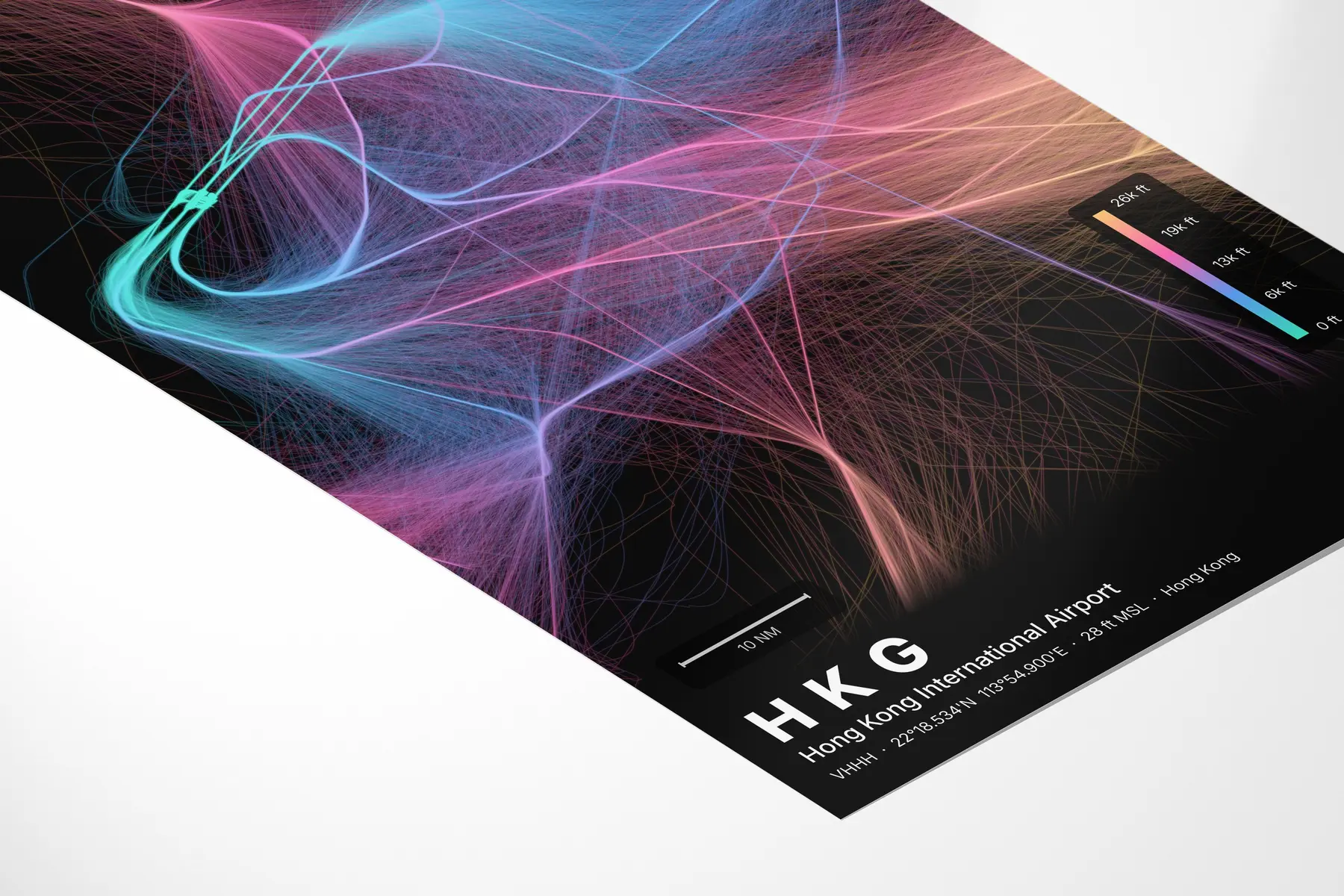
Hong Kong International Airport (HKG) is one of Asia's most pivotal aviation gateways, linking the Pearl River Delta to every major hub on earth. This metal print captures that reach — rendered from real ADS-B flight tracking data. Every path is colorized by altitude, vivid across your chosen palette.

This print visualizes all 2,272 flights recorded on March 28–29, 2026 — the 19th anniversary of Terminal 2's opening at HKG. Printed direct-to-metal on an aluminum panel, it is a piece of aviation wall art that locks one of the world's great hubs into a single, dateable moment.

HKG flight path print — Aurora theme in living-room setting [hotspot:46]HKG flight path print — Aurora theme in office setting [hotspot:55]HKG flight path print — Ember theme in living-room setting [hotspot:46]HKG flight path print — Ember theme in office setting [hotspot:55]HKG flight path print — Nebula theme in living-room setting [hotspot:46]HKG flight path print — Nebula theme in office setting [hotspot:55]HKG flight path print — Solstice theme in living-room setting [hotspot:46]HKG flight path print — Solstice theme in office setting [hotspot:55]HKG flight path print — Sky theme in living-room setting [hotspot:46]HKG flight path print — Sky theme in office setting [hotspot:55]HKG flight path print — Coast theme in living-room setting [hotspot:46]HKG flight path print — Coast theme in office setting [hotspot:55]HKG flight path print — Rose theme in living-room setting [hotspot:46]HKG flight path print — Rose theme in office setting [hotspot:55]HKG flight path print — Iris theme in living-room setting [hotspot:46]HKG flight path print — Iris theme in office setting [hotspot:55]

Dye-sublimated on aluminum · Float mount hardware included

$119

Made to order in 2–3 daysMade in the USA
Behind the Print

Statistics from the ADS-B flight data visualized in this print.

2,272

Total Flights

745

Unique Aircraft

141

Peak Hour Flights

This dataset covers two days of ADS-B traffic at Hong Kong International Airport (VHHH) from March 28 to 29, 2026, captured on the 19th anniversary of Terminal 2's opening. Across the 48-hour window, 2,272 flights were recorded, split between 1,099 arrivals, 1,149 departures, and 24 touch-and-gos. A total of 745 unique aircraft appeared in the data, drawn from registrations across more than 30 countries. Chinese-registered aircraft dominated the fleet mix at 364 of the 745 unique aircraft, followed by US (49), Laos (33), Japan (29), and South Korea (23 under SY). Operations ran continuously, with the first and last flights logged at 00:00 and 23:59 HKT respectively. The peak hour fell at 18:00 HKT with 141 movements, and the average across all hours was 47.3 flights per hour. Activity held broadly steady through the midday and evening windows, with totals from 10:00 through 22:00 consistently above 100 flights per hour. The quietest stretch ran from 02:00 to 03:00, dipping to 35 total movements. Macau International Airport (MFM) topped the route list at 168 flights, all arrivals, followed closely by Shenzhen (SZX) at 163 total with a heavily departure-skewed split of 14 arrivals and 149 departures. Taipei Taoyuan (TPE) was the most balanced top route at 78 arrivals and 81 departures. Shun Tak Heliport (HHP) appeared fourth with 152 total movements. Approach traffic came predominantly from the ENE (329 counts), WNW (172), and SW (129). Departures trended toward NE (288), SSE (229), and N (193). The altitude profile shows a heavy concentration of ADS-B points below 1,000 feet (72,932 points) and a second major cluster in the 34,000 to 38,000 foot range, peaking in the 36,000 to 37,000 foot band at 26,885 points. The highest-altitude flight reached 49,175 feet, a 445.7 nm arrival from Taichung (RMQ) flown by B-31988. The longest flight by distance was a 3,885.4 nm arrival covering 313.9 minutes, operated by B-LHL. The shortest was an 11.4 nm departure to Shun Tak Heliport lasting 28.8 minutes. Combined, the 2,272 legs covered 943,729 nautical miles, averaging 415.4 nm and 75.7 minutes per leg.

Every print includes a QR code linking to the full flight report.

Full Flight Report
Aluminum print showing flight path visualization
Premium Material

Why Aluminum

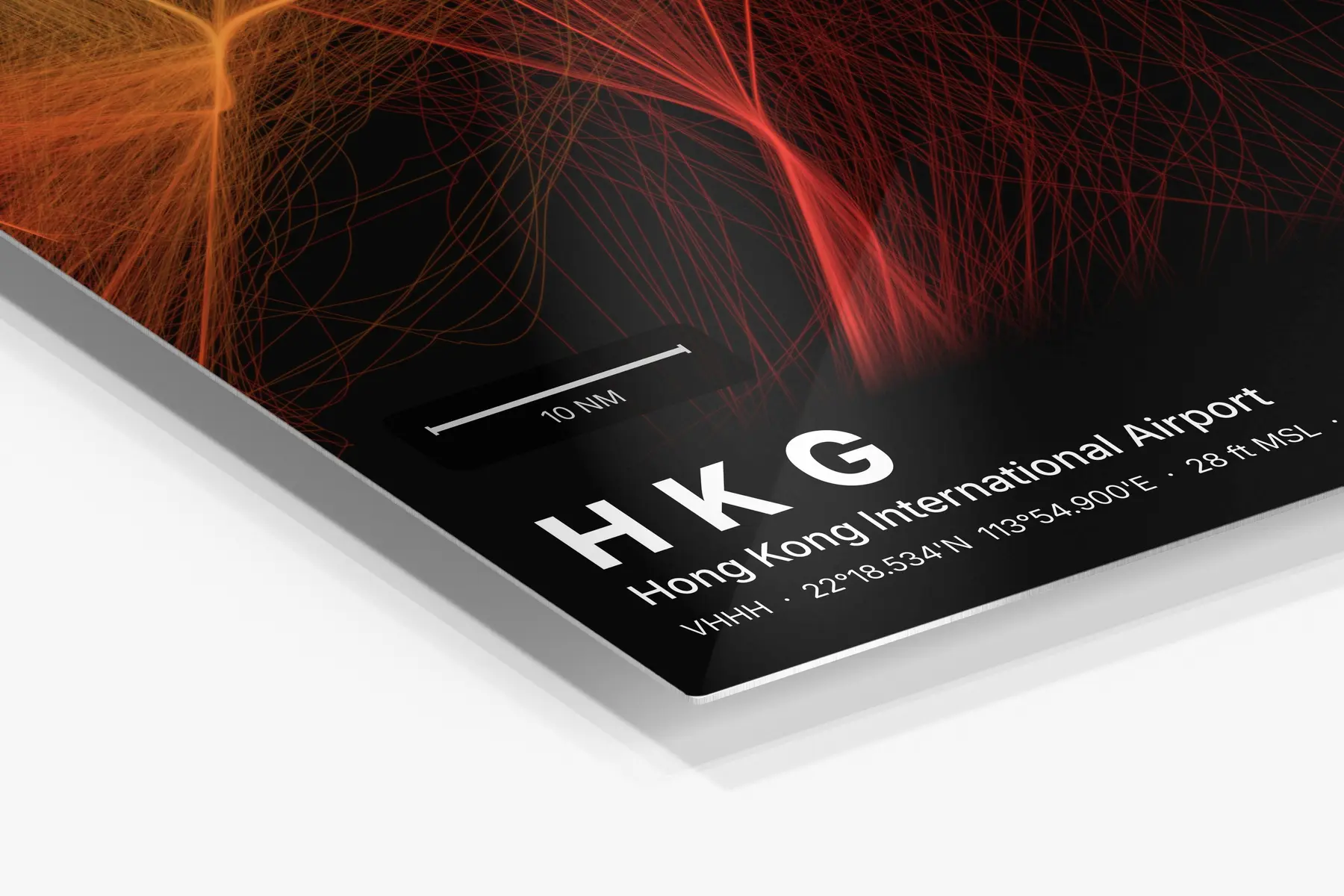
Our prints are produced on museum-grade aluminum with a high-gloss finish — the choice of professional galleries worldwide.

Dye-Sublimated

Colors infused directly into the aluminum surface for unmatched vibrancy.

Deep Blacks & Vibrant Color

High-gloss finish delivers exceptional contrast and altitude gradients.

Archival Durability

Scratch-resistant, waterproof, and fade-resistant for decades of display.

Modern Float Mount

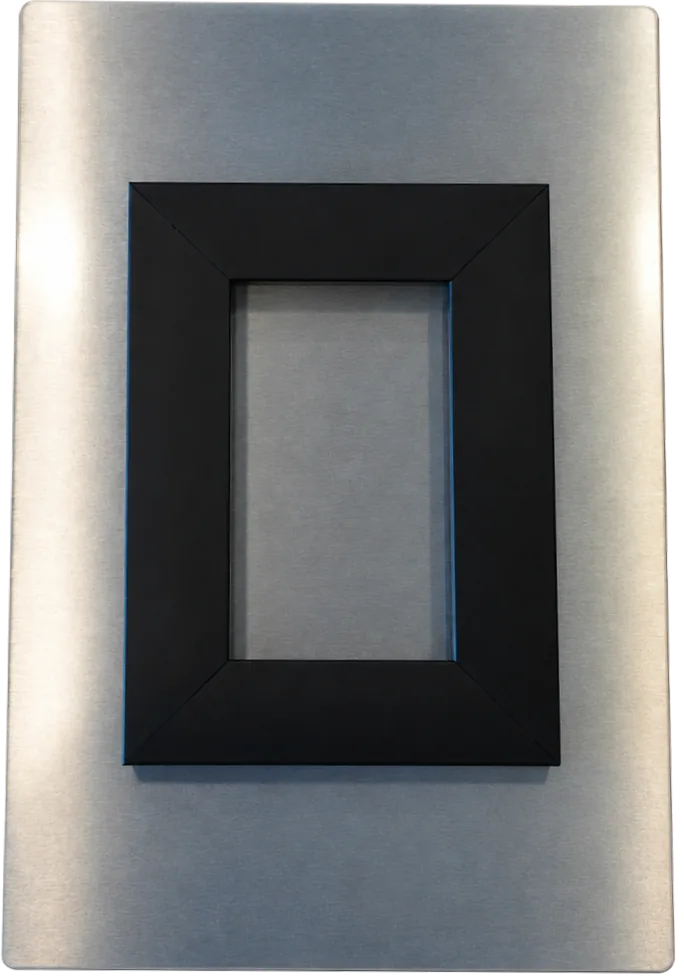
Included mounting hardware creates a sleek 3/4" float off the wall.

Gallery-Quality Finish

The same premium process used by museums and professional galleries.

About the Airport

Hong Kong International Airport opened on July 6, 1998, replacing the legendary Kai Tak Airport in the heart of the city. Built on reclaimed land on Lantau Island, the airport was one of the largest infrastructure projects in history at the time of its completion. It sits roughly 35 kilometers from central Hong Kong.

The airport operates as one of the world's busiest cargo and passenger hubs. Its location places it at the center of intra-Asia routes while also serving as a key transfer point between Europe, North America, and Southeast Asia. Cathay Pacific calls it home, and dozens of international carriers operate regular service through the airport. Two parallel runways handle the volume — a third runway is under construction and expected to significantly expand capacity when operational.

Terminal 1 opened with the airport in 1998. Terminal 2 followed on February 2, 2007, adding check-in capacity and retail space, with its SkyPier ferry terminal connecting the airport directly to ports in Mainland China and Macau. The design of both terminals reflects the work of British architect Sir Norman Foster, whose cable-stayed roof structure for Terminal 1 remains one of the most recognizable airport interiors in the world. The airport consistently ranks among the top airports globally for passenger experience and on-time performance. Its position on Lantau Island, flanked by open water, also gives arriving and departing aircraft some of the most distinctive approach and departure paths in commercial aviation.