SkyPath Studio
ShopAboutStoriesGuides
SkyPath Studio
ShopAboutStoriesGuides
All Airports
HND

Tokyo Haneda International Airport

Arrivals and departures, traced from ADS-B data.

Museum-quality gloss aluminum · fade-resistant · ready to hang.

From $119

HND flight path print — Inferno theme · Dark in office setting [hotspot:55]HND flight path print — Inferno theme · Dark in living-room setting [hotspot:46]
HND flight path print — Inferno theme · Dark
Flight report insert
Zoom
HND

Tokyo Haneda International Airport

Arrivals and departures, traced from ADS-B data.

Museum-quality gloss aluminum · fade-resistant · ready to hang.

Tokyo Haneda International Airport (HND) is Japan's busiest airport and a primary connection between Tokyo and the rest of the Asia-Pacific region. This metal print traces that traffic using ADS-B flight tracking data. Each path is colorized by altitude across your chosen palette, mapping every climb and descent into a gradient of light on aluminum.

This print renders all 2,586 flights recorded August 25-26, 2025, the 94th anniversary of the first flight to depart HND. Printed direct-to-metal on an aluminum panel, it is a piece of aviation wall art built around a single day of real traffic data.

$119

Free U.S. shipping

  • Made in the USA
  • Ships in 2–3 Days
  • Replaced if damaged
  • Secure checkout

What's included

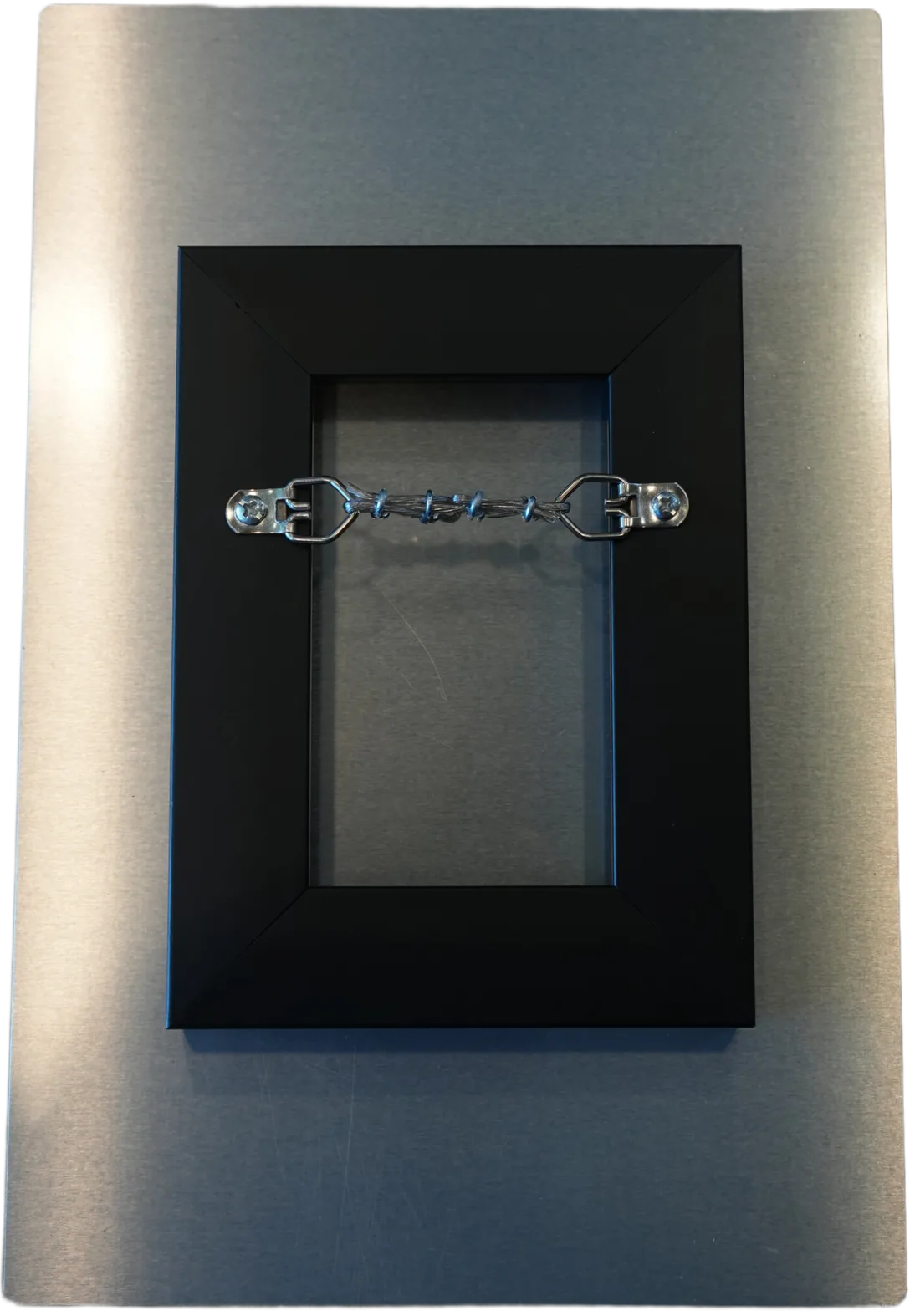
  • Gloss aluminum print, float-mount hardware pre-installed
  • Companion 8×8 flight-report print — the airport's routes, aircraft, and traffic stats on archival matte fine-art paper

Inferno · Dark · 8×12″

$119

Tokyo Haneda International Airport (HND) is Japan's busiest airport and a primary connection between Tokyo and the rest of the Asia-Pacific region. This metal print traces that traffic using ADS-B flight tracking data. Each path is colorized by altitude across your chosen palette, mapping every climb and descent into a gradient of light on aluminum.

This print renders all 2,586 flights recorded August 25-26, 2025, the 94th anniversary of the first flight to depart HND. Printed direct-to-metal on an aluminum panel, it is a piece of aviation wall art built around a single day of real traffic data.

Seth, founder of SkyPath Studio

Made by Seth. Three generations of pilots, one artist.

My grandfather flew a Mooney across the country interviewing farmers as a journalist. My father and uncle fly private. My brother flies as a First Officer for United Airlines. I stayed on the ground. I turn flight data into art.

Aluminum print showing flight path visualization
Premium Material

Why Aluminum

Our prints are produced on museum-quality aluminum with a high-gloss finish, the same material professional galleries use.

Dye-Sublimated

Colors infused directly into the aluminum surface, not printed on top.

Deep Blacks, Saturated Color

High-gloss finish holds sharp contrast across the altitude gradients.

Archival Durability

Scratch-resistant, waterproof, and fade-resistant for decades of display.

Modern Float Mount

Included mounting hardware creates a sleek 3/4" float off the wall.

First order

Take 15% off your first print

Drop your email — we'll send your code and a heads-up when we add new airports.

Own This Print
SkyPath Studio

Museum-quality aluminum prints made from flight data.

Navigation

  • Shop
  • About Us
  • Stories
  • Guides

Support

  • FAQ
  • Privacy Policy
  • Terms of Service

Connect

Questions or order help

hello at skypathstudio dot com

© 2026 SkyPath Studio. All rights reserved.

Made in the USA
First order

15% off your first print

Enter your email and your code is yours.

Behind the Print

Every ADS-B-tracked flight visualized in this print, captured over 2 days.

2,586

Total Flights

511

Unique Aircraft

1,447,724

ADS-B Points

HND logged 2,586 flights across August 25 and 26, 2025, split almost perfectly between 1,290 arrivals and 1,296 departures. The 511 unique aircraft active over those two days averaged 53.9 movements per hour, with traffic running continuously from midnight through 23:59 JST. The busiest hour was 08:00, when 176 flights operated, 88 arrivals and 88 departures in exact balance. Activity built sharply from a quiet overnight window, with the 03:00 hour recording only 8 total movements, then climbed through the morning and held above 130 movements per hour from 08:00 through 22:00 before tapering again. The Haneda to Osaka Itami corridor was the heaviest single route, with 121 combined movements (60 arrivals, 61 departures). Kansai International added another 48, and Gimpo in Seoul contributed 38. Approach tracks were concentrated from the WSW, accounting for 559 of 1,290 recorded arrival vectors, followed by W at 177 and NNE at 168. Departure headings spread more broadly, with WSW leading at 394, W at 343, and N at 177. Japanese-registered aircraft made up the clear majority of the fleet, 350 of 511 unique aircraft, with Chinese and US registrations next at 46 and 40 respectively. Altitude data across roughly 1.45 million ADS-B position points shows a strong concentration below 1,000 feet (179,040 data points), reflecting the volume of approach and departure activity close to the airport. A secondary concentration clusters between 40,000 and 44,000 feet, consistent with cruise-phase tracking of longer flights. The highest recorded altitude was 47,700 feet, reached by a Chinese-registered aircraft on an arrival covering 1,326 nautical miles. The longest flight in the dataset was a 3,238 nautical mile arrival from Pondok Cabe Air Base lasting 441 minutes, flown by an Iceland-registered aircraft.

Every print includes a QR code linking to the flight stats.

See the Flight Stats

What SkyPath Customers Say

5.0

Reviews from customers across our airport print collection.

Great gift to commemorate trip!

We ordered the LHR image (aurora/light) as a gift for our son who is in college and training to be a commercial airline pilot. We had taken a family trip to London and this was the perfect gift for him. He loved the image, and immediately scanned the included QR code to review the flight data that is available to support each map. The quality and delivery timing were exceptional. We will definitely order more!

Nathan
7 days ago

LHR · London Heathrow

Response from SkyPath Studio

Thank you for your review, Nathan! We wish your son the best on his journey to becoming a pilot.

About the Airport

Tokyo Haneda International Airport (HND) opened on August 25, 1931, as Japan's first civil aviation national airport, built on 53 hectares of reclaimed land along Tokyo Bay in the Ota ward of the capital. Its inaugural flight carried cargo to Dalian in Manchuria. From the start, the airport was the primary base of Japan Air Transport, the country's flag carrier at the time. The original airfield had a single short concrete runway, a small terminal, and 2 hangars, a foundation that would expand dramatically over the following nine decades.

After being occupied by US military forces following World War II and returned to Japan in stages by 1958, the airport grew into the dominant hub for both domestic and international traffic. When Narita International Airport opened in 1978, Haneda was largely reassigned to domestic operations, handling almost all of Tokyo's internal flights while Narita absorbed international routes. That division held until 2010, when a fourth runway, the D Runway, was completed using a hybrid structure of land reclamation and steel piling at the mouth of the Tama River, a feat of engineering required by the airport's constrained waterfront position. A dedicated international terminal, now Terminal 3, opened the same year, restoring long-haul connectivity. Daytime international service expanded further in March 2014.

Today the airport operates 4 runways and 3 terminals, and serves as the primary domestic base for Japan Airlines (Terminal 1) and All Nippon Airways (Terminal 2), with Terminal 3 handling the majority of international carriers. The airport handled 85.7 million passengers in 2024, the most of any airport in Japan, and ranked among the top 5 busiest airports in the world by seat capacity as of mid-2025. Sitting just 15 kilometers south of central Tokyo, it is significantly more accessible to the city than Narita, a geographic advantage that has long made it the preferred hub for business travelers and premium routes. Because it is bordered by restricted military airspace to the west and dense urban areas to the north, most flights at HND execute circular approaches and departures over Tokyo Bay, a routing constraint that gives the airport's traffic patterns their distinctive, looping visual character.