SEA

Seattle–Tacoma International Airport

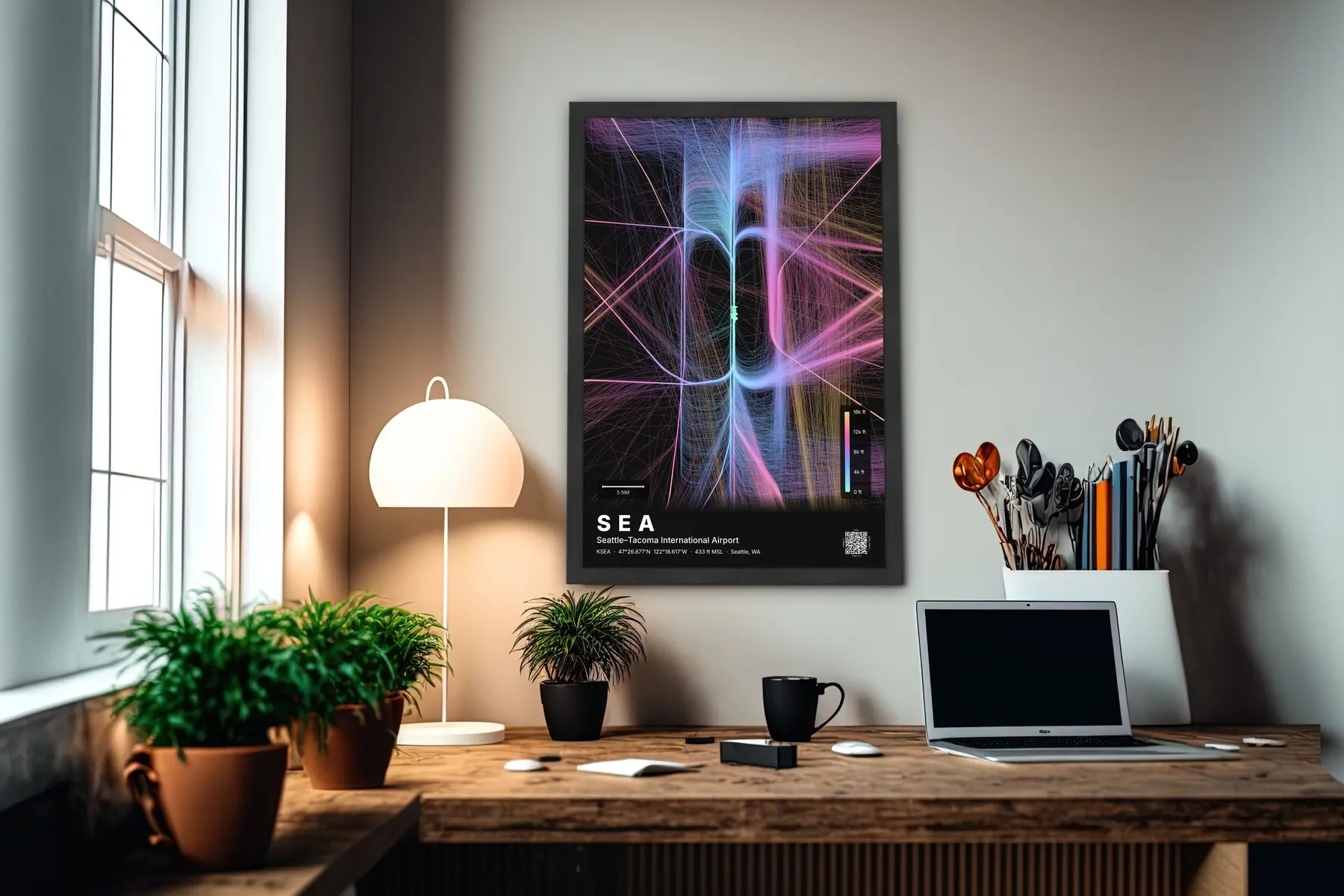
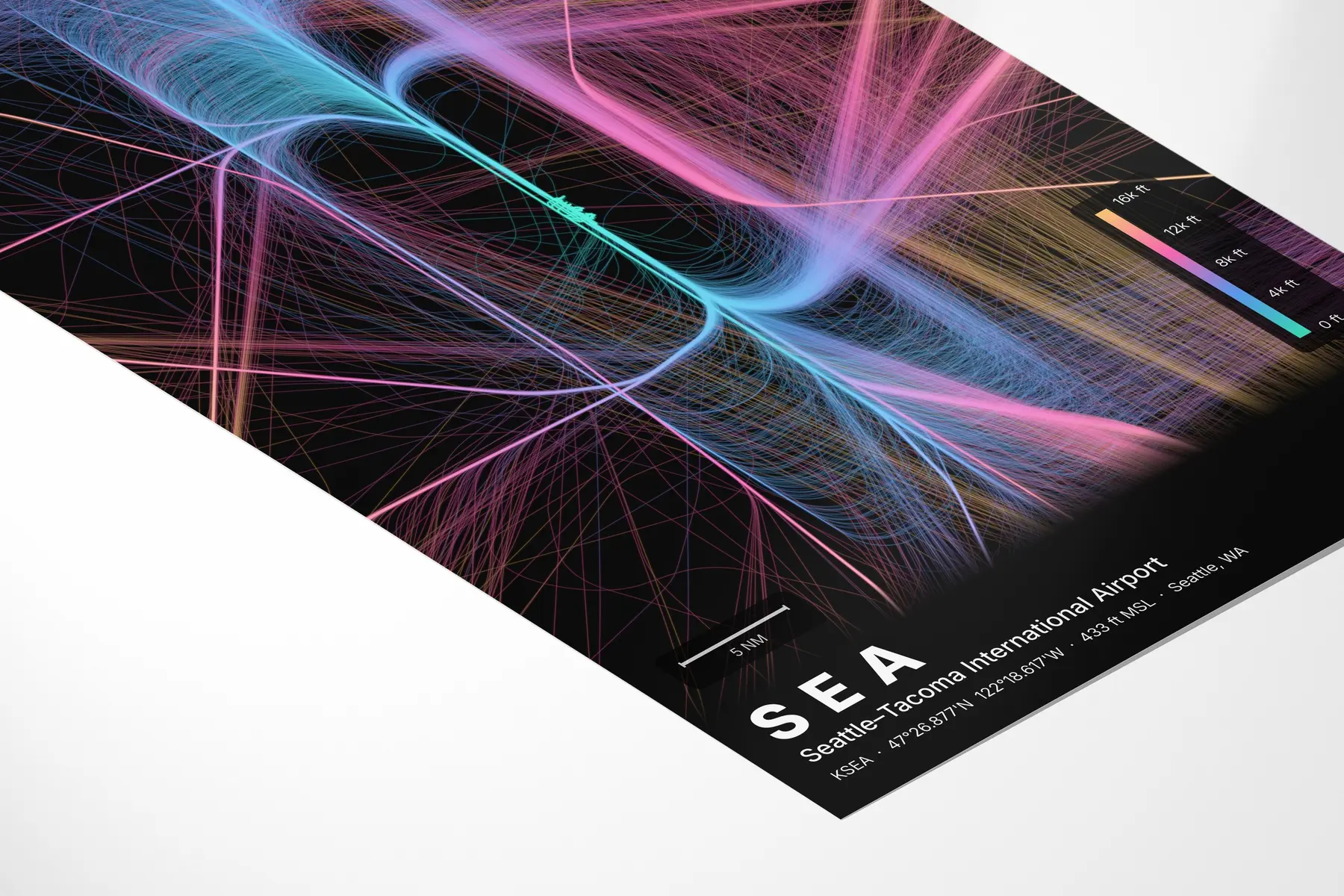
Seattle–Tacoma International Airport (SEA) is the Pacific Northwest's primary gateway, linking the region to destinations across North America, Asia, and beyond. This metal print captures that reach — rendered from real ADS-B flight tracking data. Every path is colorized by altitude, mapped across your chosen palette.

This print visualizes all 1,217 flights recorded on September 25, 2025 — the 20th anniversary of SEA's major terminal expansion completion. Printed direct-to-metal on an aluminum panel, it is a piece of aviation wall art that anchors a defining moment in this airport's growth to a single day of sky.

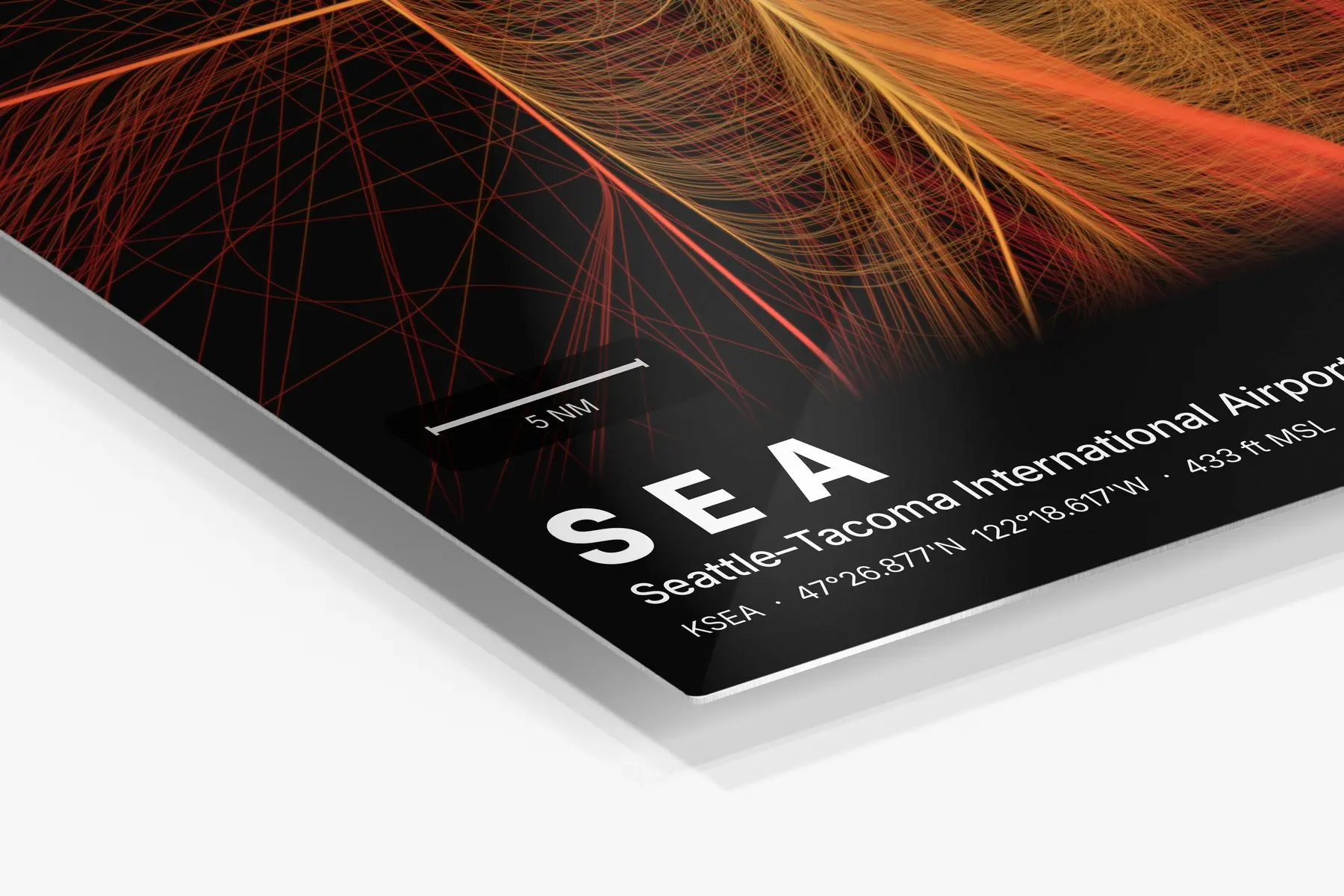
SEA flight path print — Inferno theme · Dark in living-room setting [hotspot:46]SEA flight path print — Inferno theme · Dark in office setting [hotspot:55]SEA flight path print — Solana theme · Dark in living-room setting [hotspot:46]SEA flight path print — Solana theme · Dark in office setting [hotspot:55]SEA flight path print — Citrus theme · Dark in living-room setting [hotspot:46]SEA flight path print — Citrus theme · Dark in office setting [hotspot:55]SEA flight path print — Blossom theme · Dark in living-room setting [hotspot:46]SEA flight path print — Blossom theme · Dark in office setting [hotspot:55]SEA flight path print — Prism theme · Dark in living-room setting [hotspot:46]SEA flight path print — Prism theme · Dark in office setting [hotspot:55]SEA flight path print — Inferno theme · Light in living-room setting [hotspot:46]SEA flight path print — Inferno theme · Light in office setting [hotspot:55]SEA flight path print — Solana theme · Light in living-room setting [hotspot:46]SEA flight path print — Solana theme · Light in office setting [hotspot:55]SEA flight path print — Citrus theme · Light in living-room setting [hotspot:46]SEA flight path print — Citrus theme · Light in office setting [hotspot:55]SEA flight path print — Blossom theme · Light in living-room setting [hotspot:46]SEA flight path print — Blossom theme · Light in office setting [hotspot:55]SEA flight path print — Prism theme · Light in living-room setting [hotspot:46]SEA flight path print — Prism theme · Light in office setting [hotspot:55]

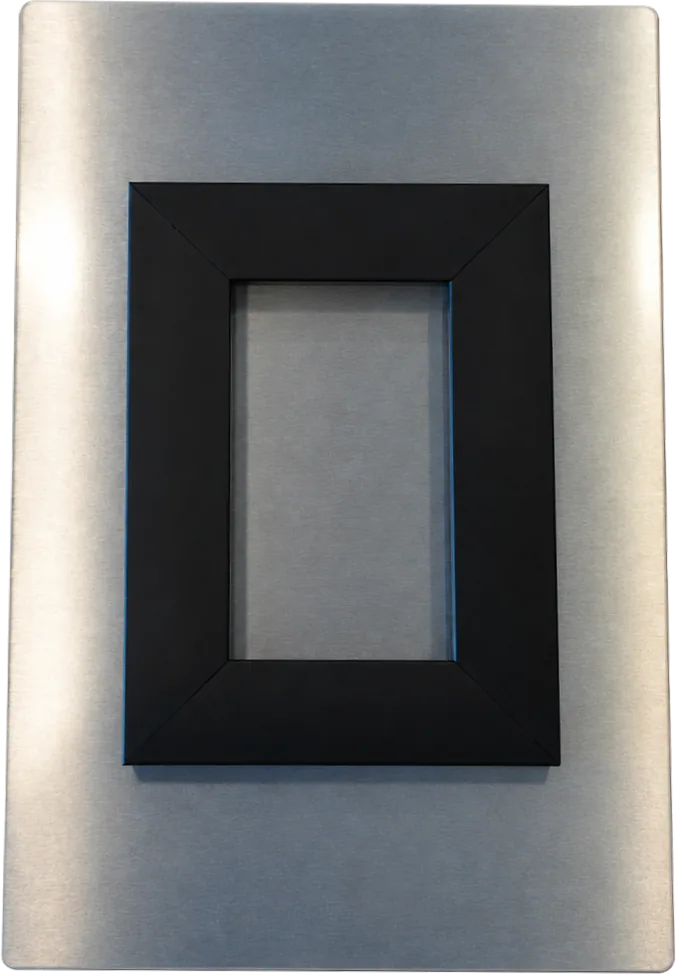
Dye-sublimated on aluminum · Float mount hardware included

$119

Made to order in 2–3 daysMade in the USA
Behind the Print

Every ADS-B-tracked flight visualized in this print — captured on a single day.

1,217

Total Flights

513

Unique Aircraft

1,139,120

ADS-B Points

This page captures ADS-B flight data for Seattle-Tacoma International Airport (SEA/KSEA) on September 25, 2025, visualized on the 20th anniversary of the airport's major terminal expansion completion. The dataset covers 1,217 total flights across the full 24-hour period, split almost evenly between 608 arrivals and 609 departures, operated by 513 unique aircraft. Traffic was active from midnight through 23:59 PDT, averaging 50.7 flights per hour across the day. The busiest single hour was 20:00-21:00, which recorded 91 movements (55 arrivals and 36 departures). A secondary peak runs through the midday window, with hours 8 through 14 each logging between 66 and 79 flights. The overnight hours from 00:00 to 04:00 were the quietest, with single-digit or low double-digit totals. The top route by total movements was Los Angeles (LAX) with 41 flights, followed by San Francisco (SFO) at 37 and Portland (PDX) at 35. Spokane (GEG) and Phoenix (PHX) round out the top five. Vancouver (YVR) was the only international airport in the top ten, accounting for 28 combined movements. Approach and departure directions were dominated by easterly headings. East was the most common direction for both arrivals (132) and departures (143), with SSE and S also appearing frequently across both categories. Aircraft registered to the United States accounted for 472 of the 513 unique aircraft, with Canadian-registered aircraft second at 9. The altitude distribution shows two concentration points. The 0-1,000 ft band recorded 149,937 ADS-B position points, reflecting departure climbs and arrival descents near the airport. A second concentration sits between 35,000 and 38,000 ft, where the three busiest bands logged 62,286, 58,347, and 54,565 points respectively. The highest recorded altitude was 46,875 ft, reached by tail number N915QS on an arrival from Scottsdale (SCF). The longest flight in the dataset was an arrival from Boston Logan (BOS), covering 3,276.1 nautical miles over 594.7 minutes. At the other end, the shortest recorded flight covered just 4.1 nautical miles. Average groundspeed across all flights was 264 knots, with a maximum of 582.8 knots. Total distance flown across all tracked legs was 978,481 nautical miles.

Every print includes a QR code linking to the full flight report.

Full Flight Report
Aluminum print showing flight path visualization
Premium Material

Why Aluminum

Our prints are produced on museum-grade aluminum with a high-gloss finish — the choice of professional galleries worldwide.

Dye-Sublimated

Colors infused directly into the aluminum surface for unmatched vibrancy.

Deep Blacks & Vibrant Color

High-gloss finish delivers exceptional contrast and altitude gradients.

Archival Durability

Scratch-resistant, waterproof, and fade-resistant for decades of display.

Modern Float Mount

Included mounting hardware creates a sleek 3/4" float off the wall.

Gallery-Quality Finish

The same premium process used by museums and professional galleries.

About the Airport

Seattle–Tacoma International Airport opened in 1949, replacing Boeing Field as the region's primary commercial facility. Built on a plateau between Seattle and Tacoma in King County, Washington, it sits at 433 feet above sea level — high enough to require careful terrain management for arriving aircraft. The location is deliberate, chosen to provide distance from both city centers while remaining accessible to each.

SEA is the largest airport in the Pacific Northwest and serves as the primary hub for Alaska Airlines, which has operated there for decades and maintains its largest operation at the airport. Delta Air Lines also operates a significant hub at SEA, connecting the region to its domestic and international network. The airport's position on the Pacific Rim makes it a natural gateway for transoceanic routes, with nonstop service to destinations across East Asia and beyond.

The airport's layout has evolved considerably over the decades. A major expansion in the mid-2000s added the Satellite Transit System and extended the central terminal, increasing capacity and improving connections between concourses. The facility operates 2 primary parallel runways oriented north-south, a configuration that reflects the region's prevailing wind patterns and allows for simultaneous independent approaches. Noise abatement procedures are a persistent operational consideration given the airport's proximity to residential communities in the Des Moines and Burien areas. SEA consistently ranks among the busiest airports in the United States by passenger volume, handling tens of millions of travelers annually.