LAS

Harry Reid International Airport

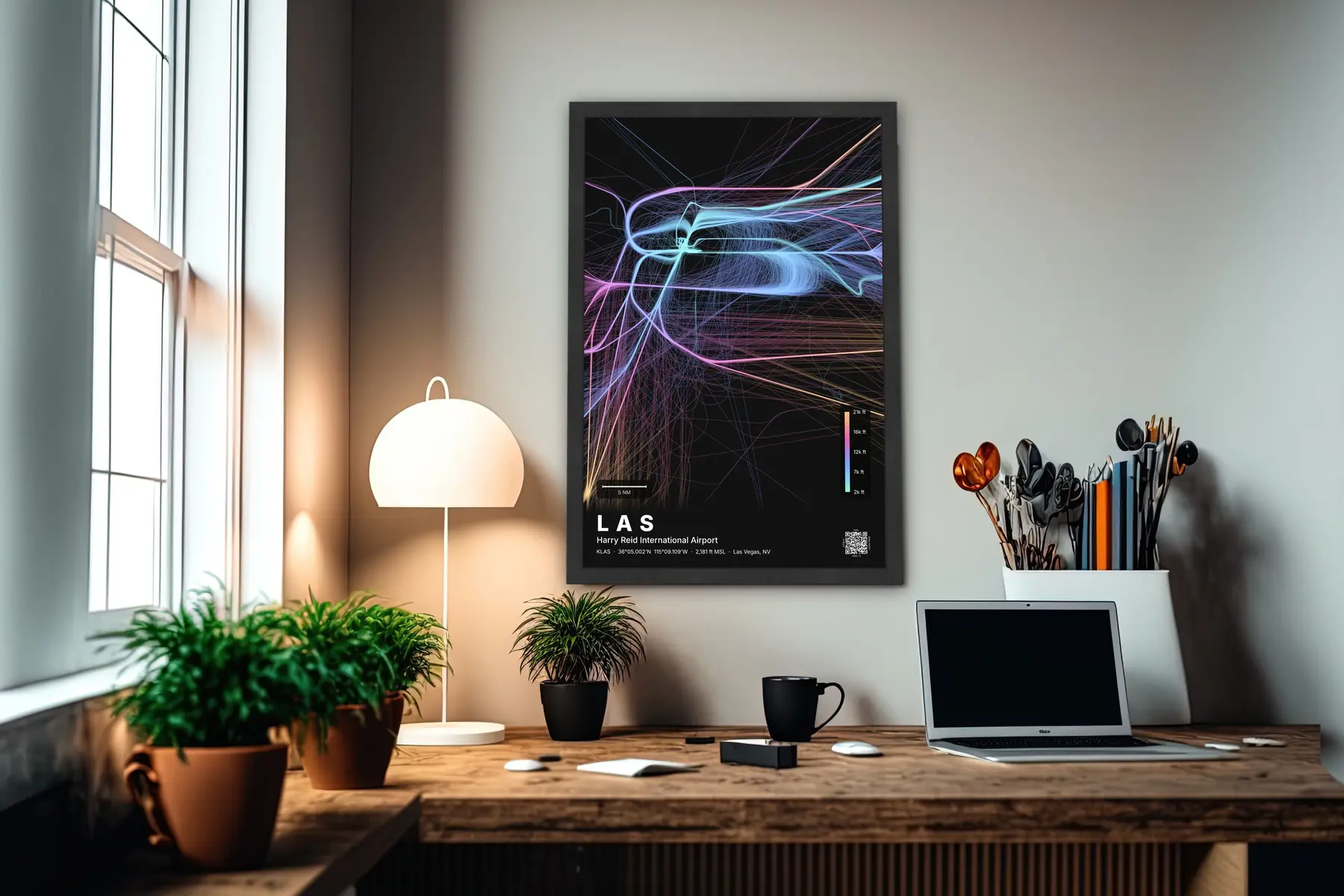
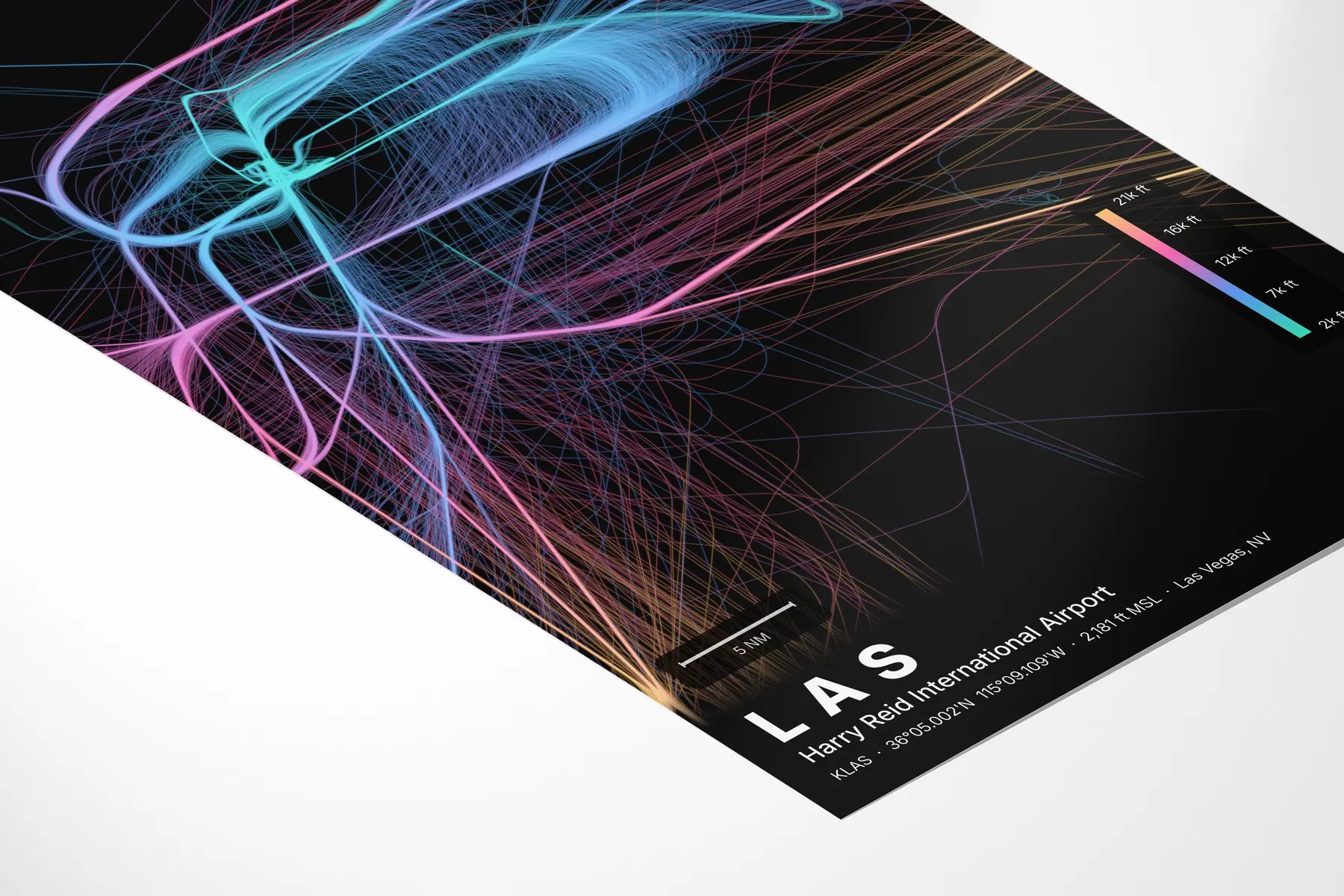
Harry Reid International Airport (LAS) is the primary gateway to Las Vegas, connecting the Mojave Desert city to hundreds of destinations across North America and beyond. This metal print captures that relentless traffic — built from real ADS-B flight tracking data. Every flight path is colorized by altitude across your chosen palette.

This print visualizes all 3,853 flights recorded January 1–4, 2026 — the 43rd anniversary of Terminal 1's opening. Printed direct-to-metal on an aluminum panel, it is a piece of aviation wall art that documents the moment this airport's passenger era came of age.

LAS flight path print — Inferno theme · Dark in living-room setting [hotspot:46]LAS flight path print — Inferno theme · Dark in office setting [hotspot:55]LAS flight path print — Solana theme · Dark in living-room setting [hotspot:46]LAS flight path print — Solana theme · Dark in office setting [hotspot:55]LAS flight path print — Citrus theme · Dark in living-room setting [hotspot:46]LAS flight path print — Citrus theme · Dark in office setting [hotspot:55]LAS flight path print — Blossom theme · Dark in living-room setting [hotspot:46]LAS flight path print — Blossom theme · Dark in office setting [hotspot:55]LAS flight path print — Prism theme · Dark in living-room setting [hotspot:46]LAS flight path print — Prism theme · Dark in office setting [hotspot:55]LAS flight path print — Inferno theme · Light in living-room setting [hotspot:46]LAS flight path print — Inferno theme · Light in office setting [hotspot:55]LAS flight path print — Solana theme · Light in living-room setting [hotspot:46]LAS flight path print — Solana theme · Light in office setting [hotspot:55]LAS flight path print — Citrus theme · Light in living-room setting [hotspot:46]LAS flight path print — Citrus theme · Light in office setting [hotspot:55]LAS flight path print — Blossom theme · Light in living-room setting [hotspot:46]LAS flight path print — Blossom theme · Light in office setting [hotspot:55]LAS flight path print — Prism theme · Light in living-room setting [hotspot:46]LAS flight path print — Prism theme · Light in office setting [hotspot:55]

Dye-sublimated on aluminum · Float mount hardware included

$119

Made to order in 2–3 daysMade in the USA
Behind the Print

Every ADS-B-tracked flight visualized in this print — captured over 4 days.

3,853

Total Flights

1,484

Unique Aircraft

3,495,106

ADS-B Points

This dataset covers four days of ADS-B traffic at Harry Reid International Airport (KLAS) from January 1 through January 4, 2026, captured on the 43rd anniversary of Terminal 1's opening. Over that span, 3,853 flights were recorded, split nearly evenly between 1,903 arrivals and 1,950 departures, with 1,484 unique aircraft tracked across 3,495,106 position reports. January 1 was the quietest day at 775 total movements, while January 2 peaked at 1,038. The airport operated around the clock, with the busiest single hour falling at 14:00 PST, which logged 282 flights, 184 of them departures. Activity dropped sharply in the early morning hours, with just 16 total movements recorded at 03:00. Arrivals dominated the late afternoon and evening window, particularly between 16:00 and 20:00, while departures led from morning through mid-afternoon. Nellis Air Force Base (KLSV) topped the route list with 240 combined movements, ahead of Los Angeles International (KLAX) at 206. San Francisco (KSFO), Hollywood Burbank (KBUR), and Seattle-Tacoma (KSEA) rounded out the next three. Approach and departure directions were dominated by ENE and E headings, each accounting for over 300 to 400 movements, with SW third in both categories. The fleet was predominantly US-registered, with 1,368 of 1,484 unique aircraft flagged to the United States. Canadian-registered aircraft numbered 48, followed by 42 with unresolved country codes. The altitude distribution shows a dense concentration of position reports between 2,000 and 3,000 feet, reflecting terminal maneuvering activity around the airport's 2,181-foot elevation. Cruise-level activity clustered between 30,000 and 38,000 feet, with peaks at the 35,000-36,000 and 37,000-38,000 foot bands. The highest-recorded flight reached 50,200 feet, operated by N122GA arriving from Lynden Pindling International in Nassau. The longest flight by distance was 2,962.1 nautical miles, an arrival from Hartsfield-Jackson Atlanta flown by N350FR over 788.6 minutes. Average groundspeed across all tracked flights was 257 knots, with a maximum of 619.2 knots recorded in the dataset.

Every print includes a QR code linking to the full flight report.

Full Flight Report
Aluminum print showing flight path visualization
Premium Material

Why Aluminum

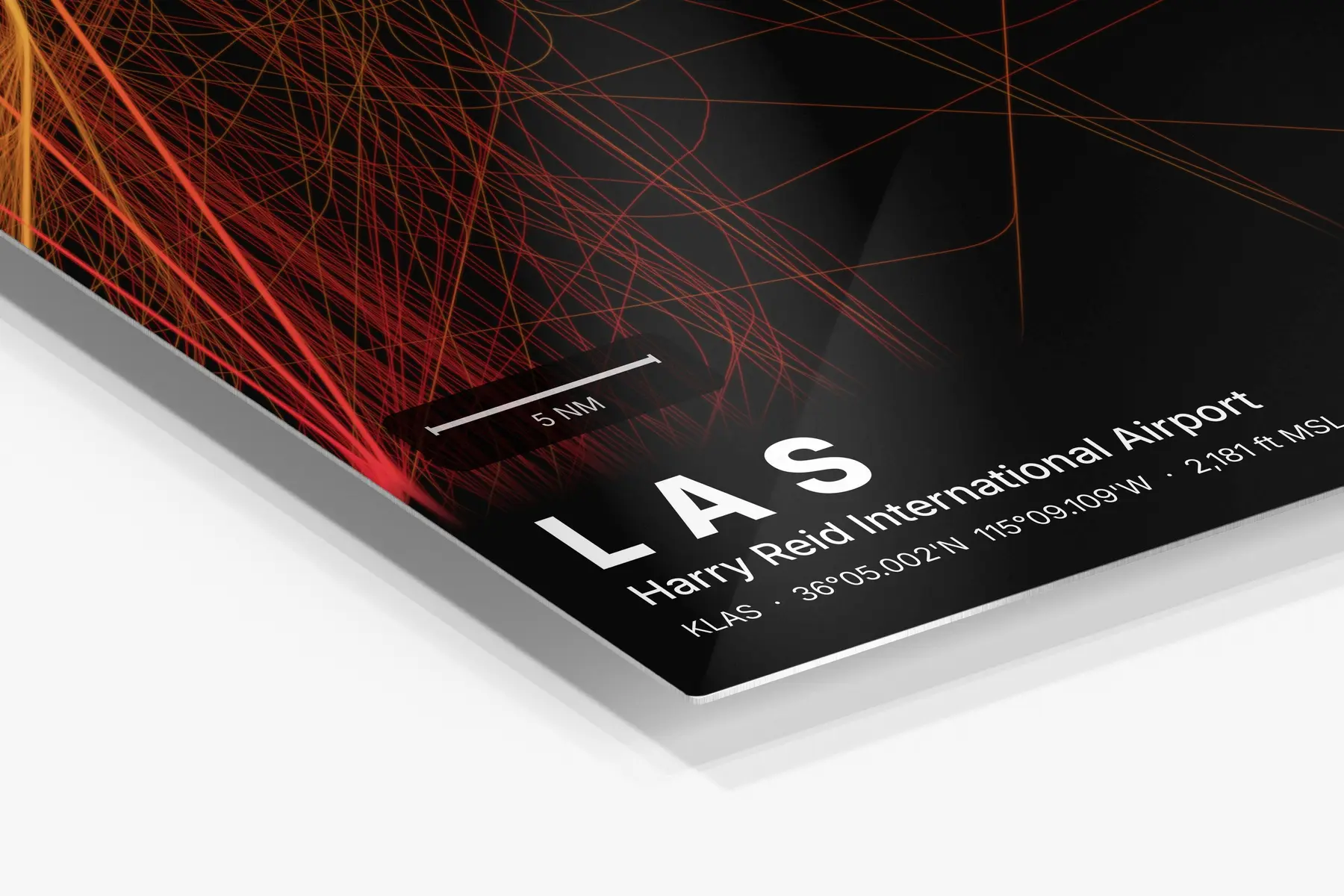
Our prints are produced on museum-grade aluminum with a high-gloss finish — the choice of professional galleries worldwide.

Dye-Sublimated

Colors infused directly into the aluminum surface for unmatched vibrancy.

Deep Blacks & Vibrant Color

High-gloss finish delivers exceptional contrast and altitude gradients.

Archival Durability

Scratch-resistant, waterproof, and fade-resistant for decades of display.

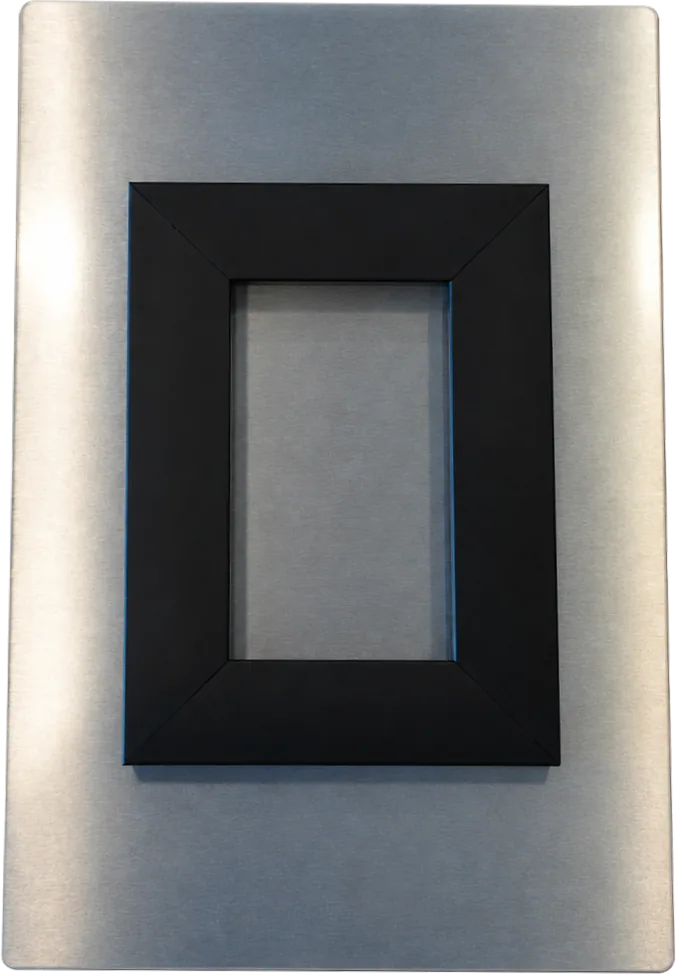
Modern Float Mount

Included mounting hardware creates a sleek 3/4" float off the wall.

Gallery-Quality Finish

The same premium process used by museums and professional galleries.

About the Airport

Harry Reid International Airport traces its origins to 1942, when the site was established as Army Air Field during World War II. Commercial service followed in the postwar years, and the airport was officially designated McCarran International Airport in 1948, named for Nevada senator Pat McCarran. It was renamed Harry Reid International Airport in 2021, honoring the late U.S. Senate Majority Leader from Nevada.

The airport sits roughly 5 miles south of the Las Vegas Strip, in the heart of the Las Vegas Valley. That location matters. It places LAS within a short drive of one of the world's densest concentrations of hotels, entertainment venues, and convention facilities — a demand engine that keeps the airport consistently ranked among the busiest in the United States by passenger volume. Terminal 1 opened in January 1983, dramatically expanding capacity. Terminal 3 followed in 2012, adding international gates and further modernizing the facility.

LAS functions primarily as an origin-and-destination airport rather than a connecting hub, meaning the vast majority of its passengers are traveling to or from Las Vegas rather than transferring through it. Southwest Airlines has long operated LAS as one of its highest-volume stations. Spirit, Frontier, and all major U.S. network carriers serve the airport, along with a growing roster of international routes to Europe and Mexico. The runway layout — 4 runways arranged in 2 parallel pairs — allows for simultaneous operations and contributes to the airport's ability to absorb peak holiday and convention traffic. Few airports in the world experience the kind of demand spikes LAS sees around major events like New Year's Eve and the Super Bowl.