SkyPath Studio
ShopAboutStoriesGuides
SkyPath Studio
ShopAboutStoriesGuides
All Airports
LAX

Los Angeles International Airport

Arrivals and departures, traced from ADS-B data.

Museum-quality gloss aluminum · fade-resistant · ready to hang.

From $119

LAX flight path print — Inferno theme · Dark in office setting [hotspot:55]LAX flight path print — Inferno theme · Dark in living-room setting [hotspot:46]
LAX flight path print — Inferno theme · Dark
Flight report insert
Zoom
LAX

Los Angeles International Airport

Arrivals and departures, traced from ADS-B data.

Museum-quality gloss aluminum · fade-resistant · ready to hang.

Los Angeles International Airport (LAX) is the primary gateway to one of the world's great cities, the largest and busiest international airport on the U.S. West Coast, and the only airport in the country to rank among the top five for both passenger and cargo traffic. This metal print captures that reach in precise detail, built from ADS-B flight tracking data. Every flight path is colorized by altitude, rendered across your chosen palette.

$119

Free U.S. shipping

  • Made in the USA
  • Ships in 2–3 Days
  • Replaced if damaged
  • Secure checkout

What's included

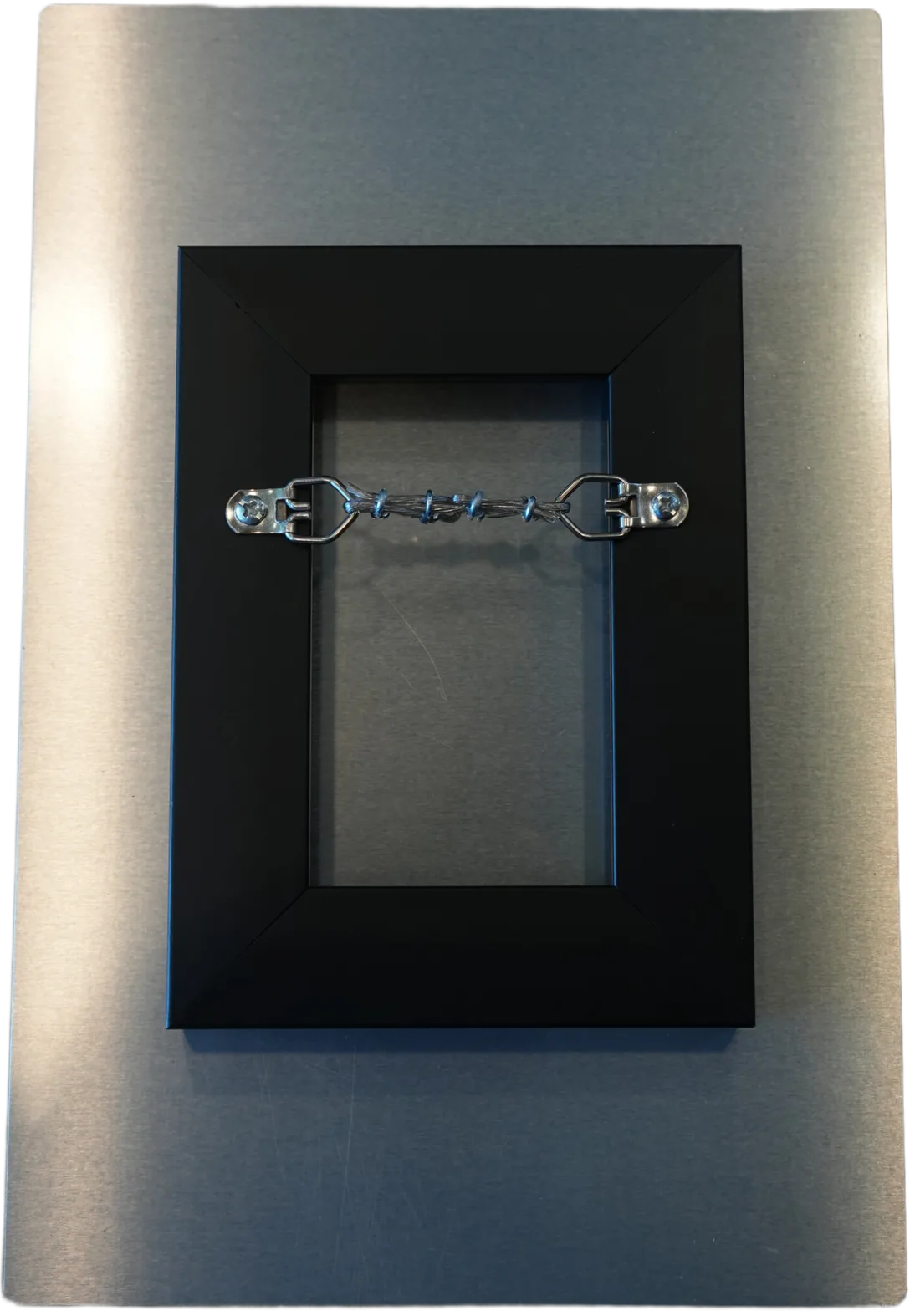
  • Gloss aluminum print, float-mount hardware pre-installed
  • Companion 8×8 flight-report print — the airport's routes, aircraft, and traffic stats on archival matte fine-art paper

Inferno · Dark · 8×12″

$119

Los Angeles International Airport (LAX) is the primary gateway to one of the world's great cities, the largest and busiest international airport on the U.S. West Coast, and the only airport in the country to rank among the top five for both passenger and cargo traffic. This metal print captures that reach in precise detail, built from ADS-B flight tracking data. Every flight path is colorized by altitude, rendered across your chosen palette.

Seth, founder of SkyPath Studio

Made by Seth. Three generations of pilots, one artist.

My grandfather flew a Mooney across the country interviewing farmers as a journalist. My father and uncle fly private. My brother flies as a First Officer for United Airlines. I stayed on the ground. I turn flight data into art.

Aluminum print showing flight path visualization
Premium Material

Why Aluminum

Our prints are produced on museum-quality aluminum with a high-gloss finish, the same material professional galleries use.

Dye-Sublimated

Colors infused directly into the aluminum surface, not printed on top.

Deep Blacks, Saturated Color

High-gloss finish holds sharp contrast across the altitude gradients.

Archival Durability

Scratch-resistant, waterproof, and fade-resistant for decades of display.

Modern Float Mount

Included mounting hardware creates a sleek 3/4" float off the wall.

First order

Take 15% off your first print

Drop your email — we'll send your code and a heads-up when we add new airports.

Own This Print
SkyPath Studio

Museum-quality aluminum prints made from flight data.

Navigation

  • Shop
  • About Us
  • Stories
  • Guides

Support

  • FAQ
  • Privacy Policy
  • Terms of Service

Connect

Questions or order help

hello at skypathstudio dot com

© 2026 SkyPath Studio. All rights reserved.

Made in the USA
First order

15% off your first print

Enter your email and your code is yours.

Behind the Print

Every ADS-B-tracked flight visualized in this print, captured over 4 days.

6,128

Total Flights

2,035

Unique Aircraft

5,667,459

ADS-B Points

LAX logged 6,128 flights across four days in December 2025, averaging 1,532 movements per day and 63.8 per hour around the clock. Arrivals and departures split almost evenly, with 3,042 arrivals and 3,086 departures. The busiest single hour was 11:00 PST, when 384 flights moved through the airspace, 233 of them departures. Traffic built steadily from a quiet predawn trough, with the 4:00 hour recording just 33 movements, then surged past 270 by 6:00 as arrivals led the morning wave. The busiest day of the capture was December 12, which recorded 1,629 flights. San Francisco was the top connecting airport, accounting for 294 combined movements, followed by Las Vegas at 227 and JFK at 209. Phoenix, Seattle, Denver, Dallas-Fort Worth, Chicago O'Hare, San Jose, and Sacramento rounded out the top ten routes. Approach and departure tracks concentrated heavily to the east and east-northeast, which together accounted for the largest share of directional traffic in both arrival and departure datasets. Northwest was the third most common direction for both. The 2,035 unique aircraft came predominantly from US registrations, which made up 1,622 of the total. Canadian, Mexican, and Chinese-registered aircraft followed at 61, 55, and 51 respectively, with aircraft from over 25 countries in the full dataset. Cruise altitudes clustered between 35,000 and 37,000 feet, the single most populated band in the altitude distribution. The highest-recorded flight reached 49,450 feet, while the shortest arrival covered just 4.3 nautical miles from Hawthorne Municipal Airport in under ten minutes. Combined, all tracked flights covered roughly 5.78 million nautical miles over the four days.

Every print includes a QR code linking to the flight stats.

See the Flight Stats

What SkyPath Customers Say

5.0

Reviews from customers across our airport print collection.

Great gift to commemorate trip!

We ordered the LHR image (aurora/light) as a gift for our son who is in college and training to be a commercial airline pilot. We had taken a family trip to London and this was the perfect gift for him. He loved the image, and immediately scanned the included QR code to review the flight data that is available to support each map. The quality and delivery timing were exceptional. We will definitely order more!

Nathan
7 days ago

LHR · London Heathrow

Response from SkyPath Studio

Thank you for your review, Nathan! We wish your son the best on his journey to becoming a pilot.

About the Airport

Los Angeles International Airport opened in October 1928 as Mines Field, an unpaved airfield on a former wheat and barley farm in the Westchester neighborhood of Los Angeles. Named after local real estate agent William W. Mines, it spent its first two decades as a municipal airfield unable to attract scheduled airline service from carriers entrenched at nearby Burbank and Glendale. That changed on December 9, 1946, when American Airlines, TWA, United Airlines, and Western Airlines simultaneously launched commercial passenger operations, relocating from Burbank Airport and Grand Central Airport in Glendale. Overnight, Los Angeles Airport became the region's dominant commercial facility. Pan American World Airways followed in 1947. The airport was officially renamed Los Angeles International Airport in 1949.

The modern terminal complex took shape in 1961, designed by a joint venture of Pereira & Luckman, Welton Becket and Associates, and architect Paul R. Williams. The plan organized a series of terminals around a central parking area, with satellite concourses reached by underground tunnels, a layout that defines the airport to this day. The Theme Building, opened the same year, became the airport's most recognizable landmark, a futurist structure that anchored the mid-century Jet Age identity of the facility. The first jet passengers had departed for New York on American Airlines 707s in January 1959. A major expansion ahead of the 1984 Los Angeles Summer Olympics added Terminal 1 and the Tom Bradley International Terminal, a $123 million international facility dedicated on June 11, 1984.

Today, LAX sits 18 miles southwest of downtown Los Angeles with the Pacific Ocean directly to the west and residential communities on all other sides, a geographic constraint that has shaped every expansion decision since the jet age. The airport is a hub or operating base for more passenger airlines than any other airport in the United States, including Alaska Airlines, American Airlines, Delta Air Lines, and United Airlines. It holds the record as the world's busiest origin-and-destination airport, with approximately 88% of its travelers beginning or ending their journey in Los Angeles rather than connecting. In 2024, the airport handled 76,587,980 passengers.