ICN

Incheon International Airport

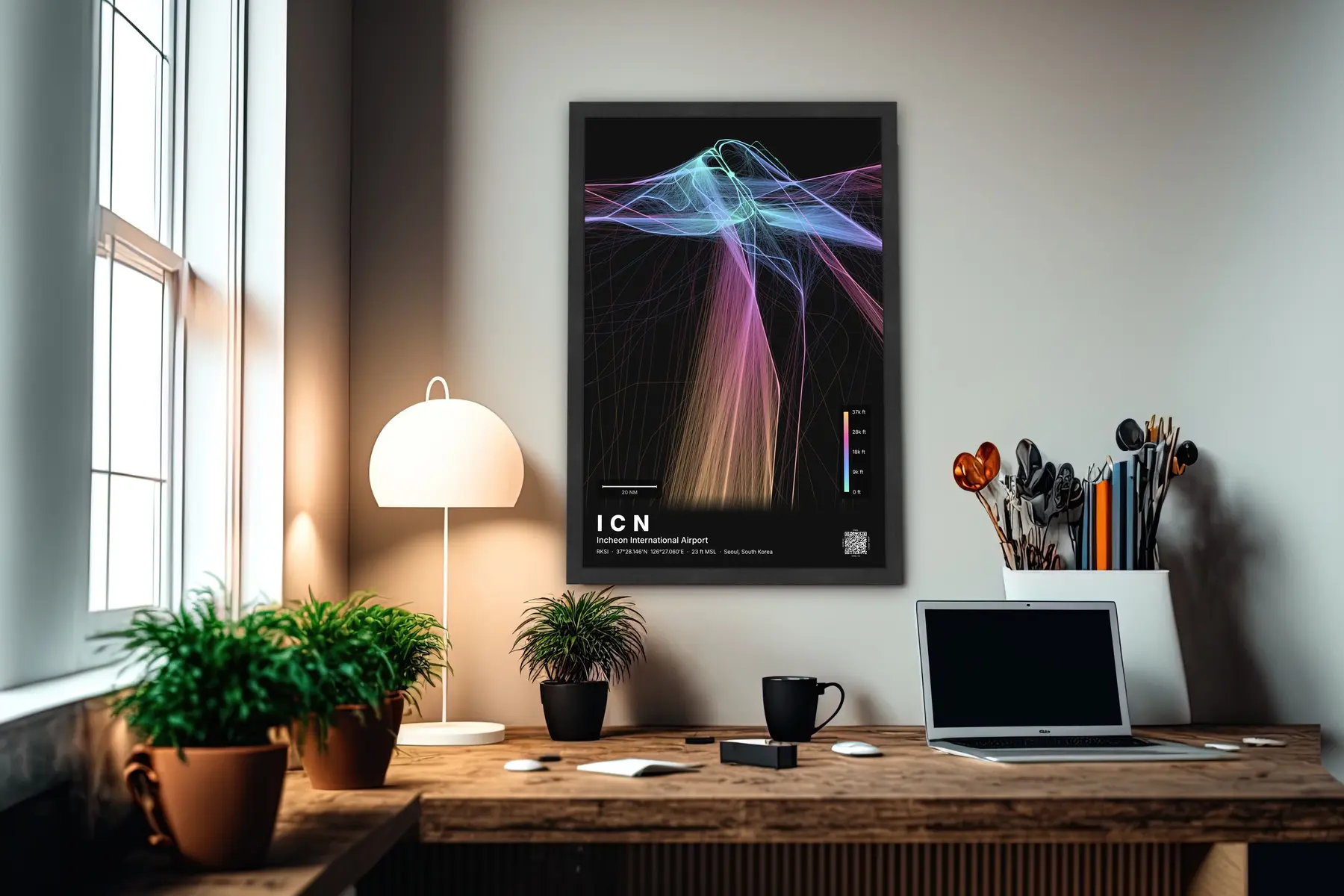
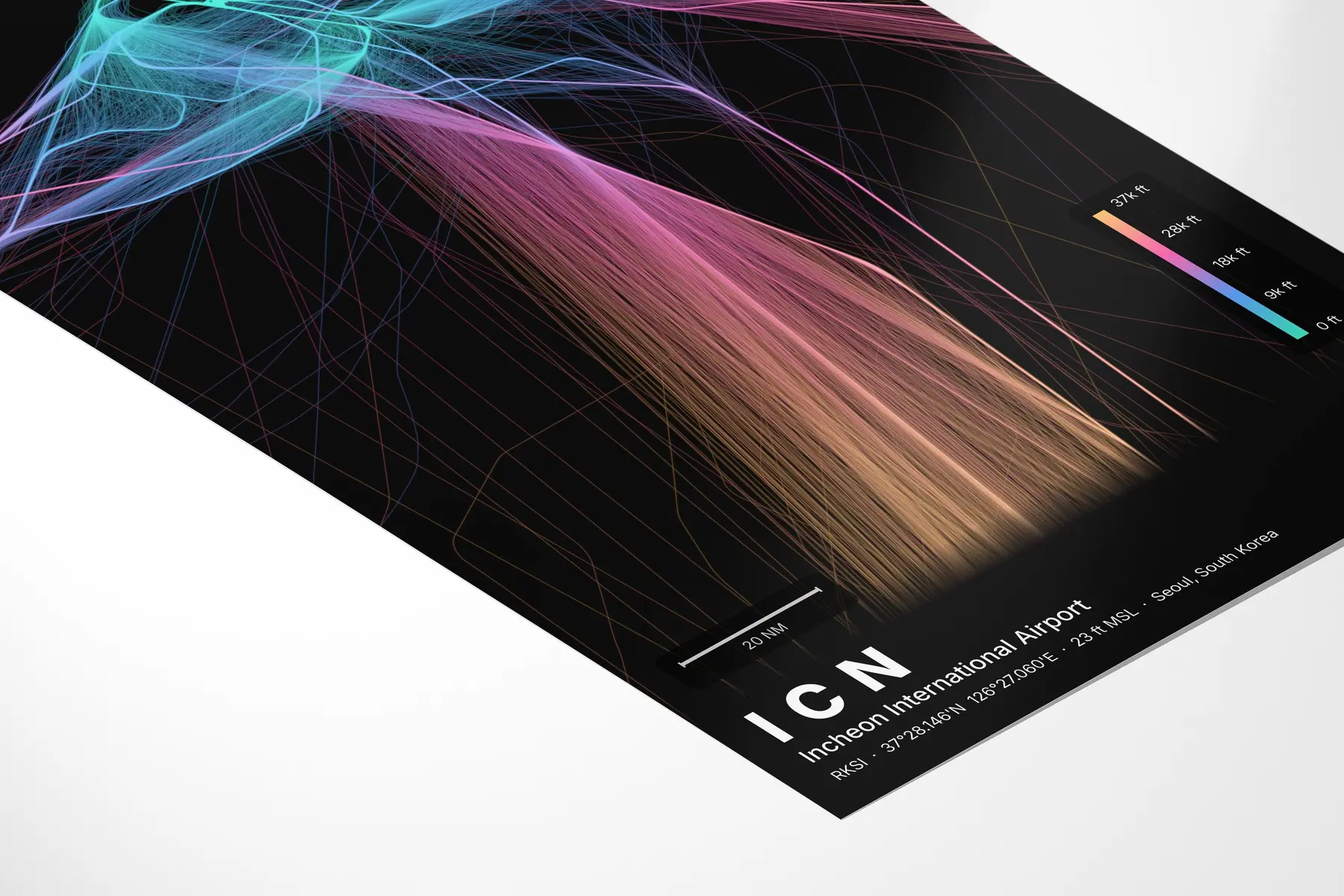
Incheon International Airport (ICN) serves as one of Asia's most connected aviation crossroads, linking Seoul to major hubs across six continents. This metal print captures that reach precisely — built from real ADS-B flight tracking data. Every flight path is colorized by altitude, rendered across your chosen palette.

This print visualizes all 8,060 flights recorded from March 29 to April 4, 2026 — the week of ICN's 25th anniversary. Printed direct-to-metal on an aluminum panel, it is a piece of aviation wall art that holds a quarter-century of momentum in a single frame.

ICN flight path print — Aurora theme in living-room setting [hotspot:46]ICN flight path print — Aurora theme in office setting [hotspot:55]ICN flight path print — Ember theme in living-room setting [hotspot:46]ICN flight path print — Ember theme in office setting [hotspot:55]ICN flight path print — Nebula theme in living-room setting [hotspot:46]ICN flight path print — Nebula theme in office setting [hotspot:55]ICN flight path print — Solstice theme in living-room setting [hotspot:46]ICN flight path print — Solstice theme in office setting [hotspot:55]ICN flight path print — Sky theme in living-room setting [hotspot:46]ICN flight path print — Sky theme in office setting [hotspot:55]ICN flight path print — Coast theme in living-room setting [hotspot:46]ICN flight path print — Coast theme in office setting [hotspot:55]ICN flight path print — Rose theme in living-room setting [hotspot:46]ICN flight path print — Rose theme in office setting [hotspot:55]ICN flight path print — Iris theme in living-room setting [hotspot:46]ICN flight path print — Iris theme in office setting [hotspot:55]

Dye-sublimated on aluminum · Float mount hardware included

$119

Made to order in 2–3 daysMade in the USA
Behind the Print

Statistics from the ADS-B flight data visualized in this print.

8,060

Total Flights

1,320

Unique Aircraft

534

Peak Hour Flights

This dataset covers seven days of ADS-B traffic at Incheon International Airport (RKSI/ICN) from March 29 to April 4, 2026, capturing 8,060 total flights across 3,558,636 individual position points. Arrivals and departures were nearly balanced at 4,021 and 4,014 respectively, with 25 touch-and-go operations also recorded. A total of 1,320 unique aircraft were observed. The busiest hour of the week was 20:00 KST, which produced 534 movements. The early morning hours from 04:00 to 06:00 were heavily skewed toward arrivals, while hours 08:00, 22:00, and 23:00 showed a strong departure majority. Average throughput across all hours was 48 flights per hour. The top route by total movements was Muan International Airport (MWX), driven almost entirely by departures at 600 versus only 10 arrivals. Weihai Dashuibo Airport (WEH) in China ranked second with 575 total movements, also departure-heavy. Kansai (KIX) and Narita (NRT) followed with more balanced two-way traffic at 475 and 457 movements. The dominant approach and departure direction was south, accounting for 1,178 approaches and 1,510 departures. East and west were the next most common directions in both categories. Altitude data spans from ground level to a peak of 47,200 feet, recorded on an arrival from Hong Kong (VHHH) by aircraft VP-COP. The average altitude across all recorded points was 15,250 feet. Cruise-level concentrations appeared between 30,000 and 41,000 feet, with notable density bands at 34,000 to 35,000 and 36,000 to 37,000 feet. The shortest flight in the dataset covered 8.2 nautical miles in under 10 minutes, while the longest stretched 1,675.2 nautical miles over nearly four hours. Aircraft registrations from China (402) led the fleet breakdown, followed by unknown registrations (228), South Korea (182), and the United States (173).

Every print includes a QR code linking to the full flight report.

Full Flight Report
Aluminum print showing flight path visualization
Premium Material

Why Aluminum

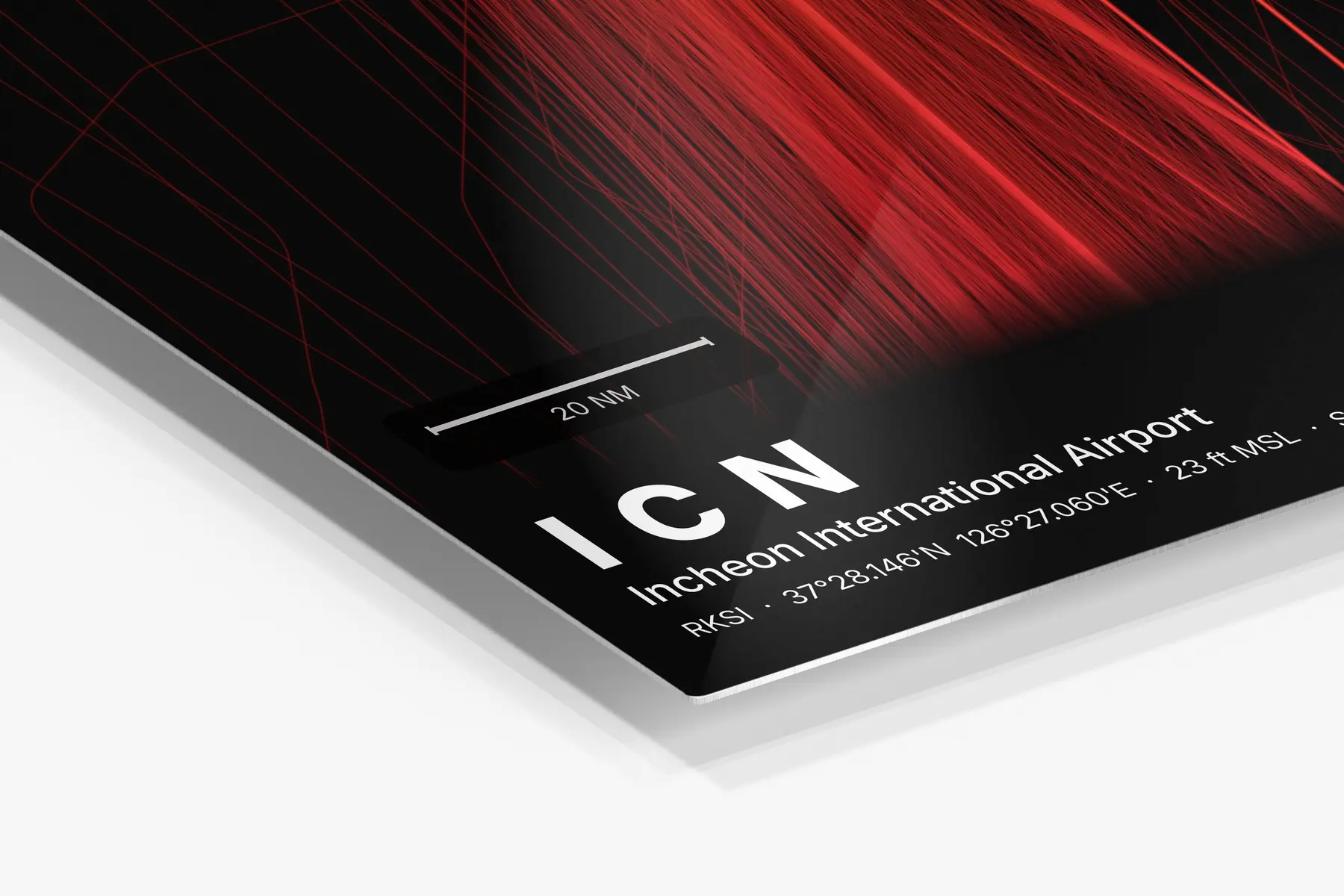
Our prints are produced on museum-grade aluminum with a high-gloss finish — the choice of professional galleries worldwide.

Dye-Sublimated

Colors infused directly into the aluminum surface for unmatched vibrancy.

Deep Blacks & Vibrant Color

High-gloss finish delivers exceptional contrast and altitude gradients.

Archival Durability

Scratch-resistant, waterproof, and fade-resistant for decades of display.

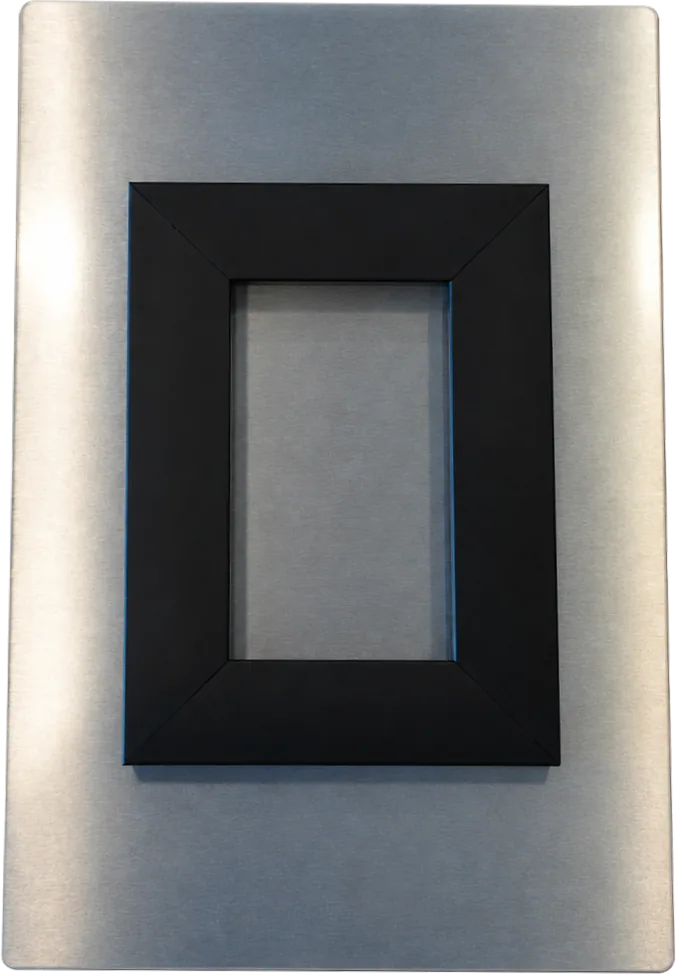
Modern Float Mount

Included mounting hardware creates a sleek 3/4" float off the wall.

Gallery-Quality Finish

The same premium process used by museums and professional galleries.

About the Airport

Incheon International Airport opened on March 29, 2001, replacing Gimpo Airport as South Korea's primary international gateway. Built on reclaimed land between Yeongjong and Sudo islands in Incheon, it sits roughly 70 kilometers west of central Seoul. The site required one of the largest land reclamation projects in Korean history. From its first day of operation, the airport was designed to compete directly with the established mega-hubs of East Asia.

ICN has consistently ranked among the world's top airports for service quality, earning the Airports Council International's top service award multiple times over two decades. Its infrastructure reflects that ambition. The airport operates 2 main runways and a 3rd dedicated to arrivals, and its passenger terminals are connected by an automated transit system. A second terminal, Terminal 2, opened in January 2018 in time for the Pyeongchang Winter Olympics, adding significant capacity for carriers including Korean Air and its SkyTeam partners. Korean Air and Asiana Airlines use ICN as their primary hub, and the airport hosts routes to over 100 destinations worldwide.

Geographically, ICN sits at the heart of the Northeast Asian air network, placing it within 3.5 hours of flight time from a third of the world's population. That position has made it a natural transit hub between North America, Europe, and Southeast Asia. The surrounding Incheon Free Economic Zone, developed alongside the airport, has grown into a significant business and logistics corridor. The airport is connected to Seoul via the AREX express rail line, which links the terminals directly to Seoul Station in under an hour.