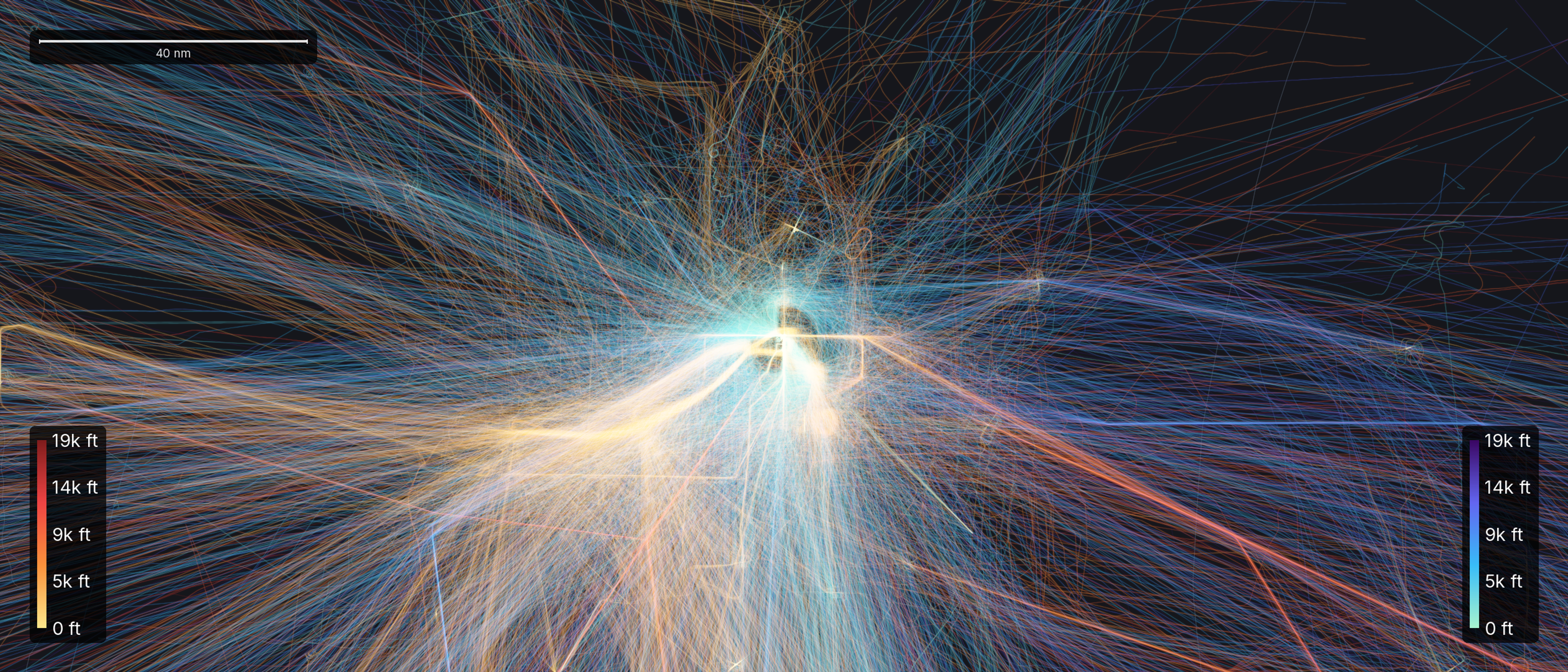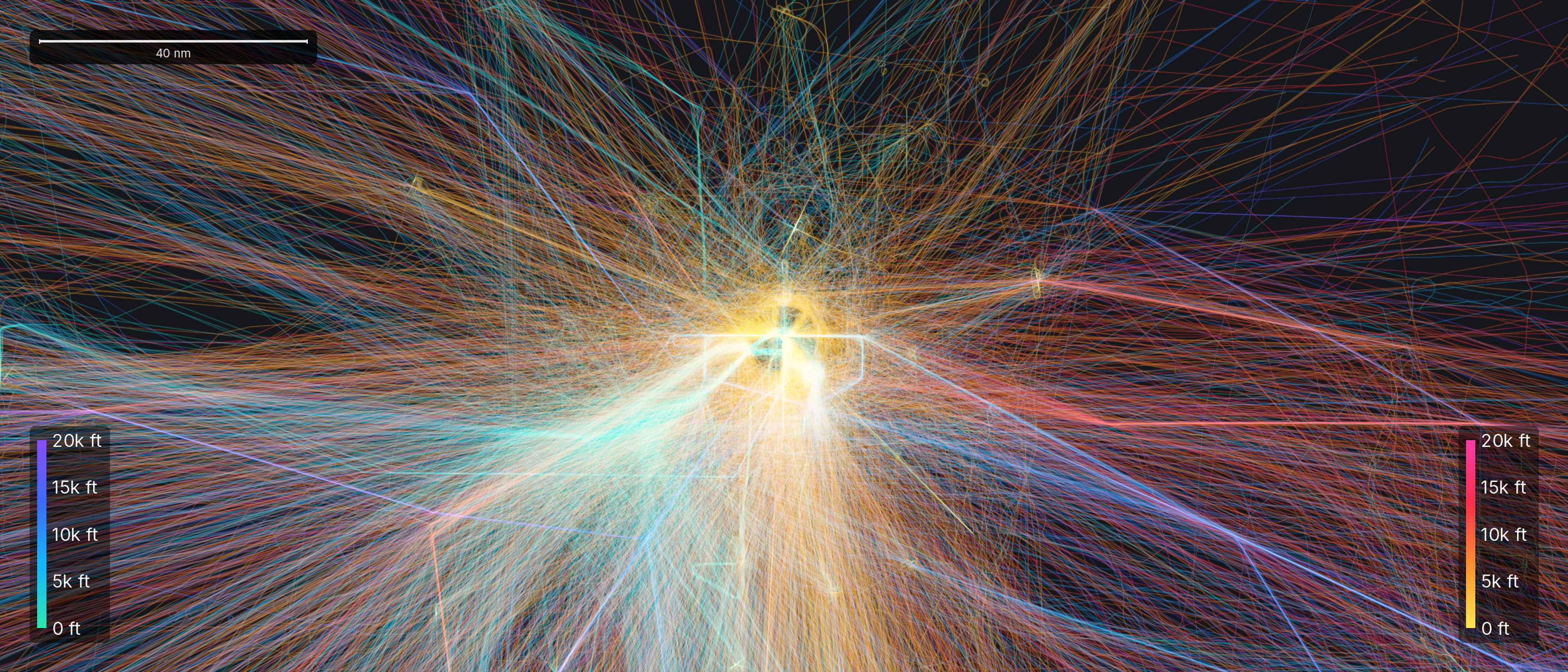
For one week every summer, a regional airport in Wisconsin becomes the busiest airport on earth. The Experimental Aircraft Association holds AirVenture at Oshkosh, and for the run of the fly-in the FAA staffs Wittman Regional (KOSH) as the busiest air traffic control tower in the world. We tracked the 2025 event in ADS-B, the position reports aircraft broadcast about twice a second. Every arrival and departure that touched Oshkosh from July 16 to 28: 9,631 flights, 4,871 aircraft. In the single busiest hour, the morning of Thursday, July 24, 341 came or went. One every eleven seconds.
flights tracked
9,631
aircraft
4,871
busiest hour
341movements
between movements
~11 sec
The tower earns that title with a system built for the volume. There is no time for radio readbacks. Controllers posted along the arrival route at Fisk sort the inbound stream by type and color, and pilots answer by rocking their wings. On the runways, crews paint large colored dots, and a controller can land one airplane on the first dot while another touches down on the third. Two on the same runway at once. On a busy day the FAA, which staffs the tower for the week, has counted close to 2,300 takeoffs and landings in about ten daylight hours. That is near what O'Hare works in a full twenty-four.
Here is the whole week.
KOSH · July 16–28, 2025
Every arrival and departure at Oshkosh
The week is a tide
Counted by day, the fly-in has a shape. Arrivals come first, building from a trickle on July 16 to a peak of 1,153 on Sunday the 20th, the day before the gates open. Then arrivals fall as departures rise, and the two cross on the 23rd. Departures peak on Thursday the 24th at 1,369, the single biggest day of the week. The fly-in floods in over five days and leaves in two waves, the Thursday exodus and the closing Sunday.
Inside the week is a day
Zoom into one day and the airport's schedule shows through. It shows most sharply in the departures, counted at the moment of takeoff. The field opens to them at 6 a.m., and the morning runs hardest from 7 to 9, aircraft that flew in earlier heading home in the cool, calm air. Arrivals build behind and crest between 11 and 1. Then, in the early afternoon, departures nearly stop. From about 2:15 to 6:30 the field closes to all movement for the airshow, and takeoffs resume in a burst when it reopens. After 8 p.m. the field is shut to departures for the night. This is a daylight operation flown under visual flight rules.
Where they came from
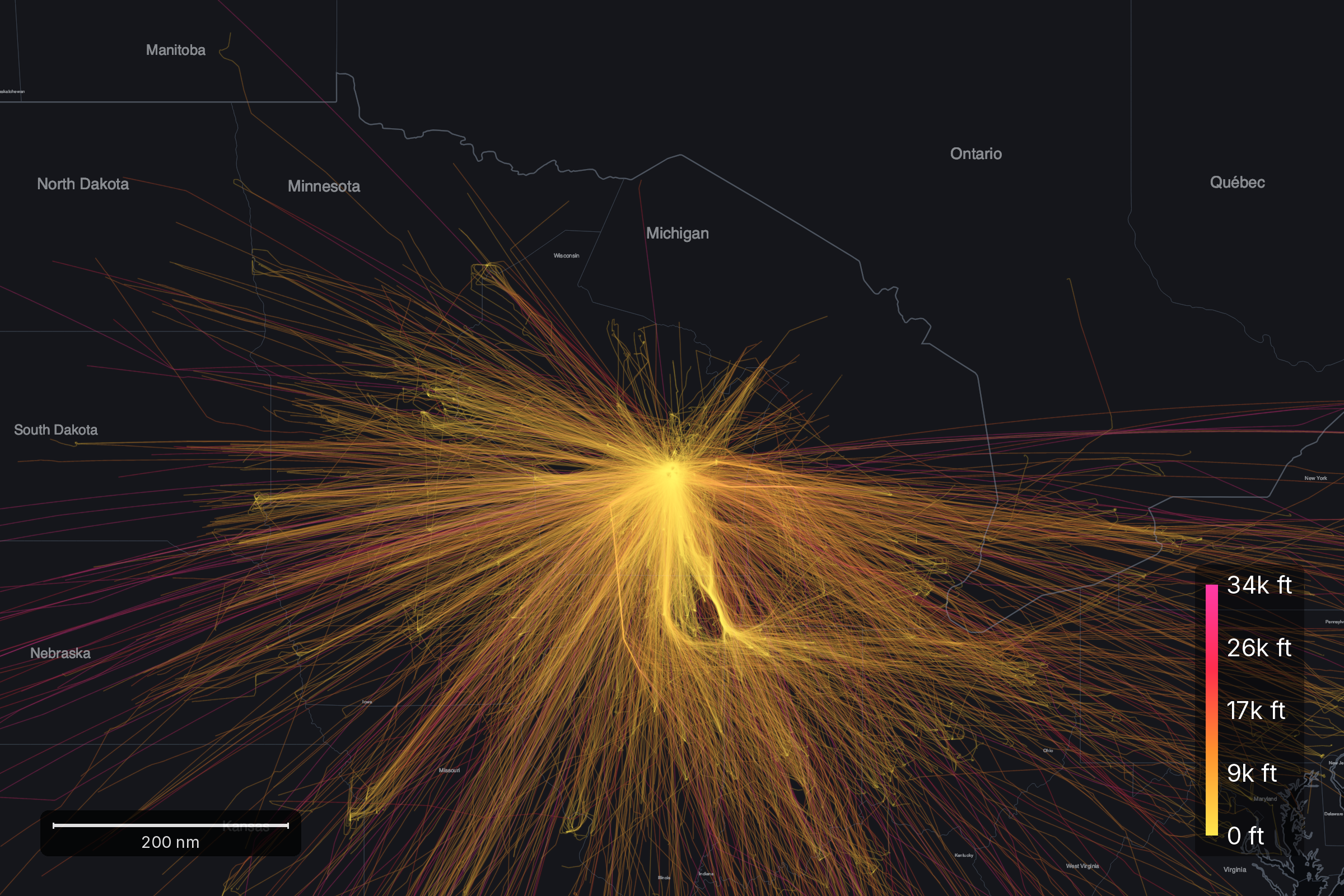
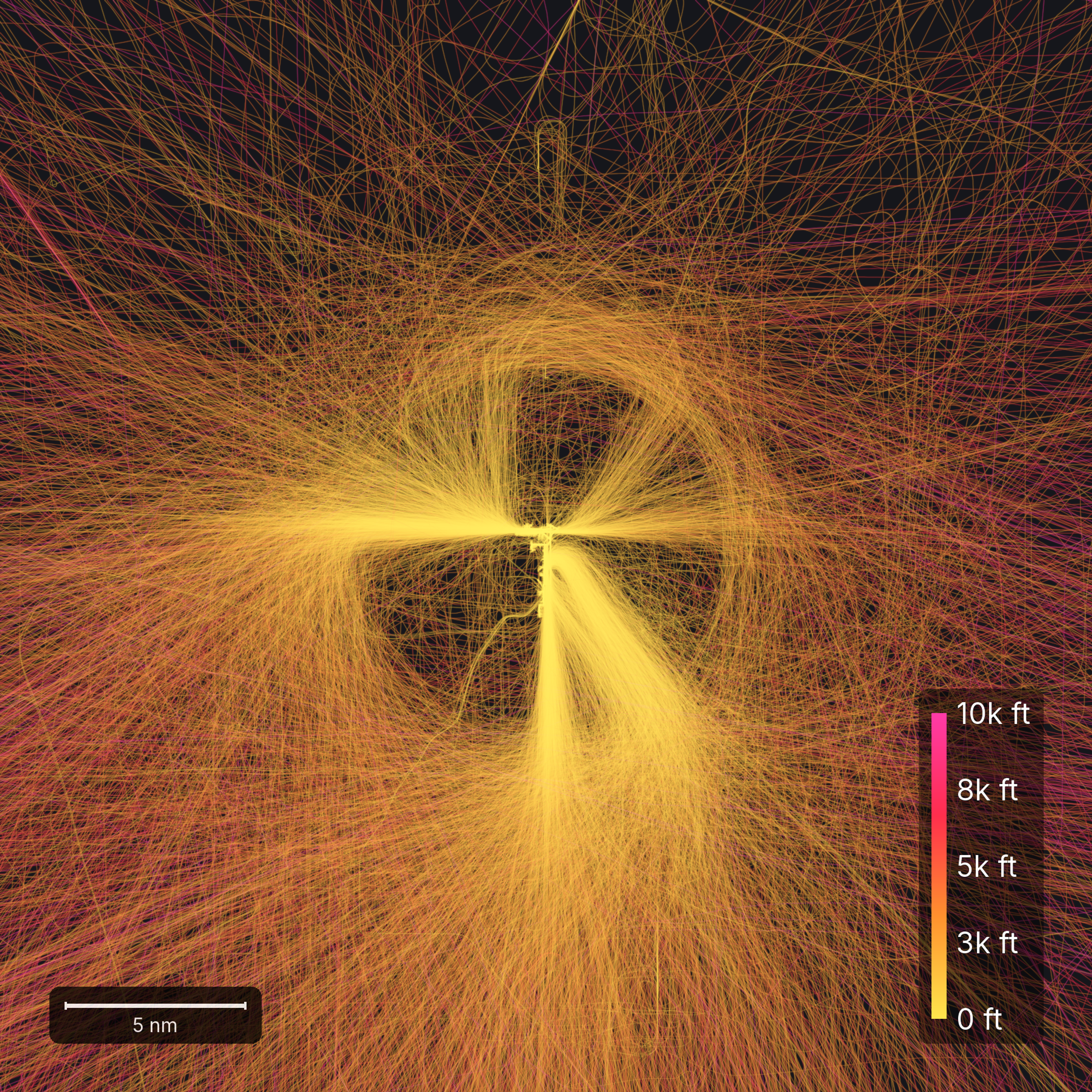
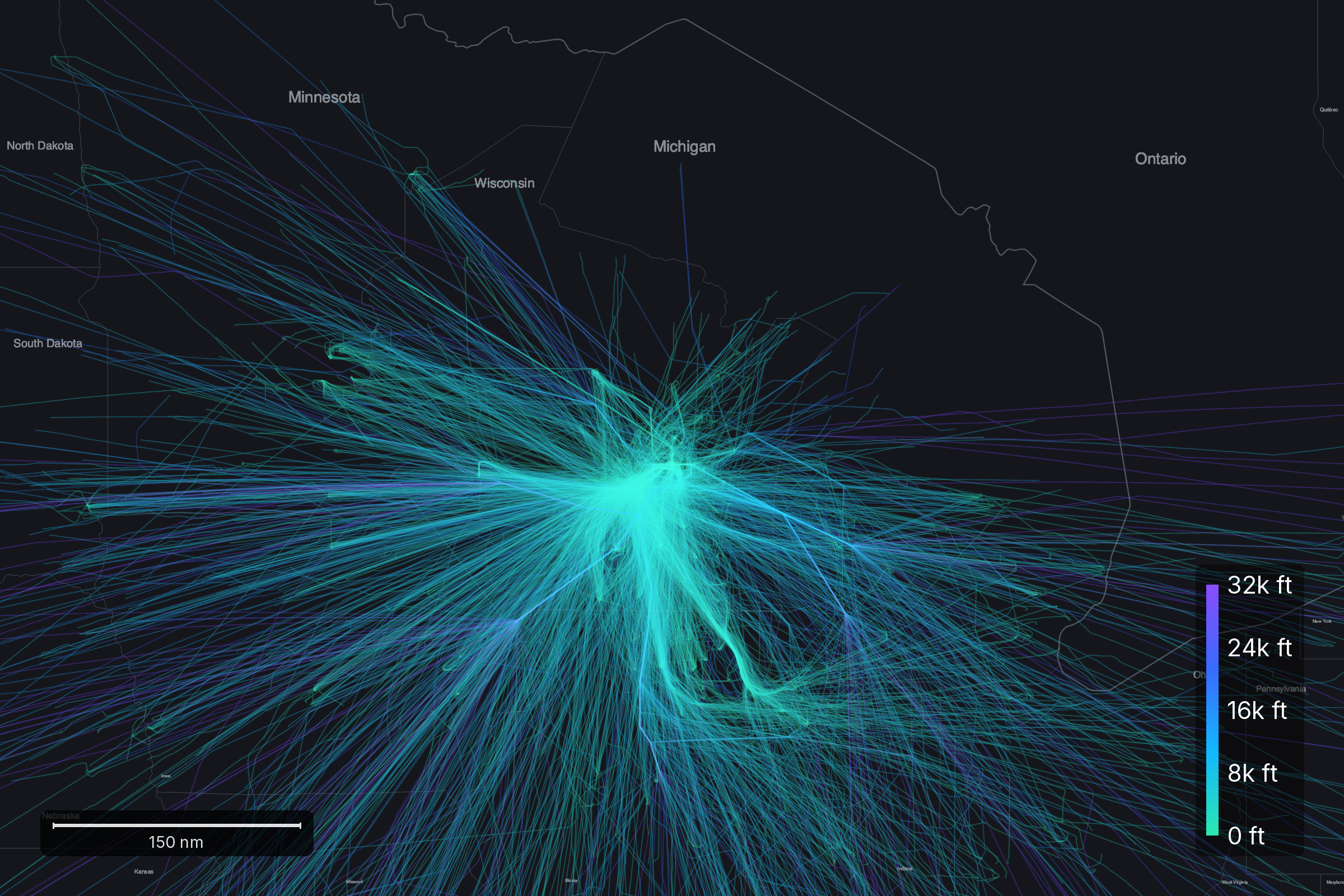
The traffic leans south. Arrivals came mostly from the south and southwest, departures left to the south and southeast. Little came from or went to the north, over Lake Superior and Canada. The arrivals are also short. The fields feeding Oshkosh are all nearby: Juneau, Madison, Lone Rock, Fond du Lac, Janesville. Aircraft stage at a field near Oshkosh, then fly the short published approach in. So the wide view of arrivals is a burst over eastern Wisconsin, not a fan across the country.
- 1KUNU256Dodge County, Juneau WI
- 2KMSN217Dane County, Madison WI
- 3KLNR210Tri-County, Lone Rock WI
- 4KFLD155Fond du Lac County WI
- 5KJVL139Southern Wisconsin, Janesville
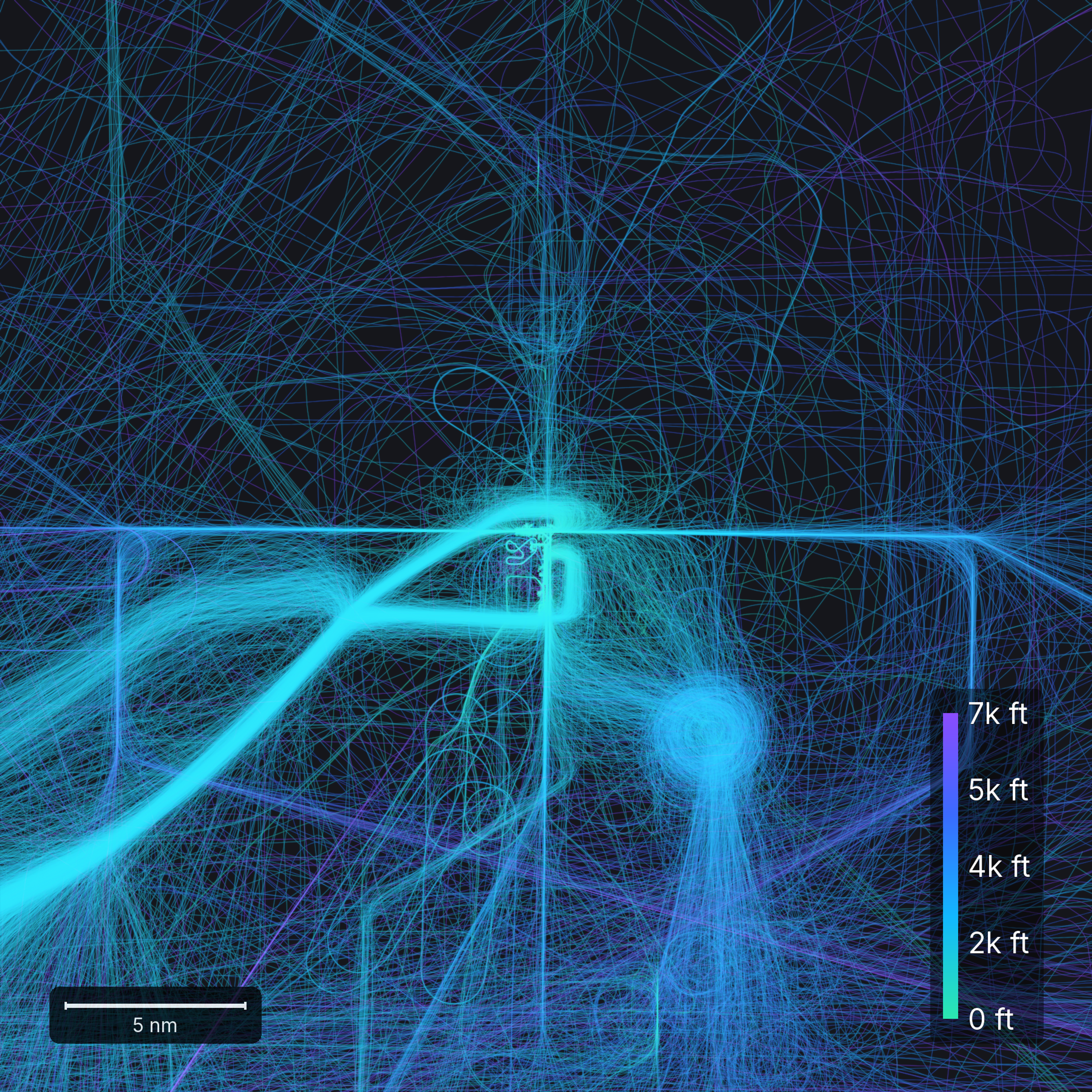
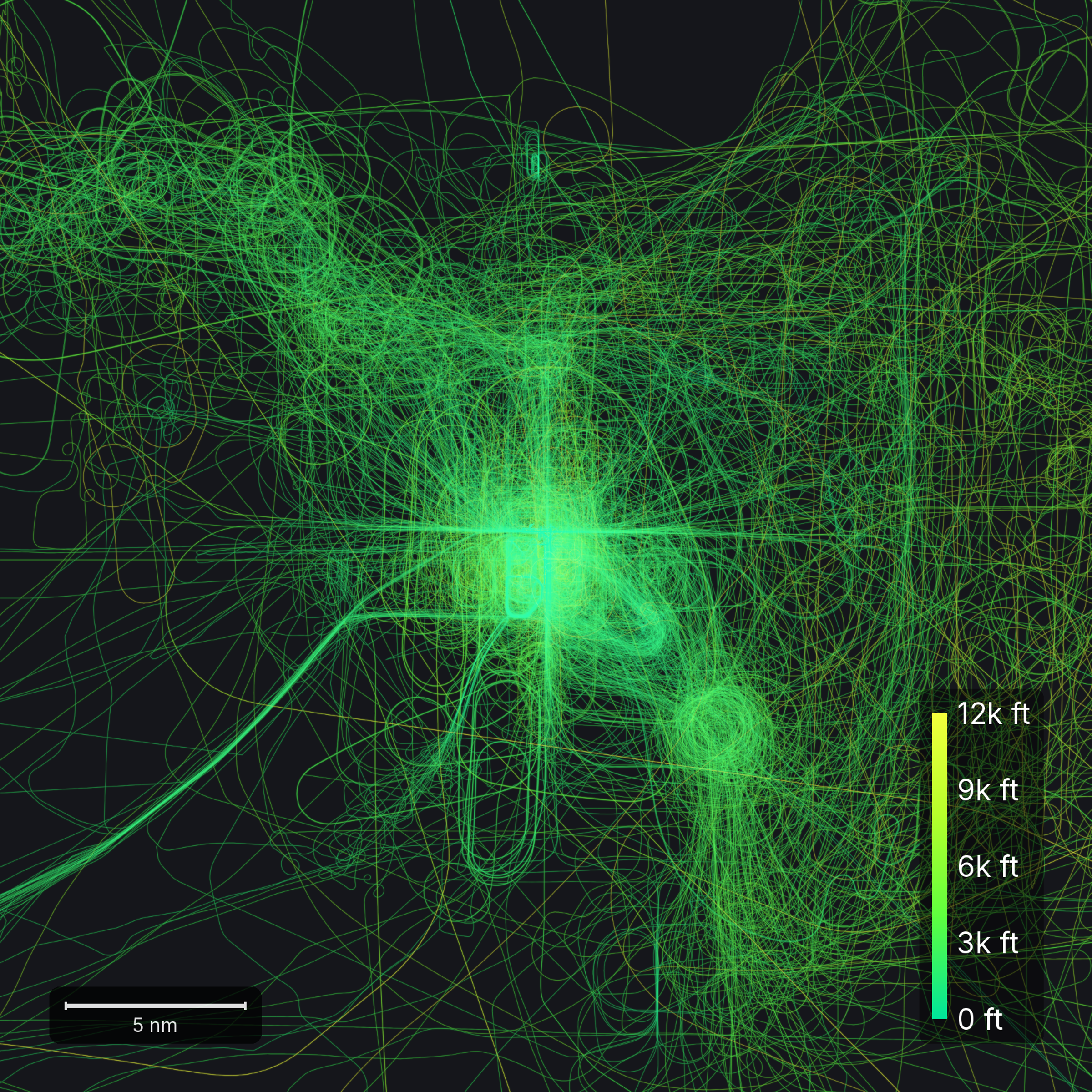
Not every aircraft came or went. 790 flights took off from Wittman and landed back where they started: pattern work, demo flights, sightseeing loops, and the airshow's aerobatic box. These are the tracks the arrival and departure maps leave out.
What flew in
More than four in five flights never climbed past 10,000 feet, the single-engine pistons and homebuilts that are the heart of the fly-in. A smaller set flew high. About 540 climbed past 18,000 feet: the business jets and warbird ferries that came from farther off. Oshkosh is a general-aviation event, and the altitude record shows it.
Cessna led at 1,326 aircraft. The second-largest maker is not a company at all: 773 were homebuilt, one-off aircraft that an individual assembled and registered under their own name. That is the fly-in's signature, and it puts amateur builders ahead of every manufacturer except Cessna. Piper came next at 706, Beechcraft at 615.
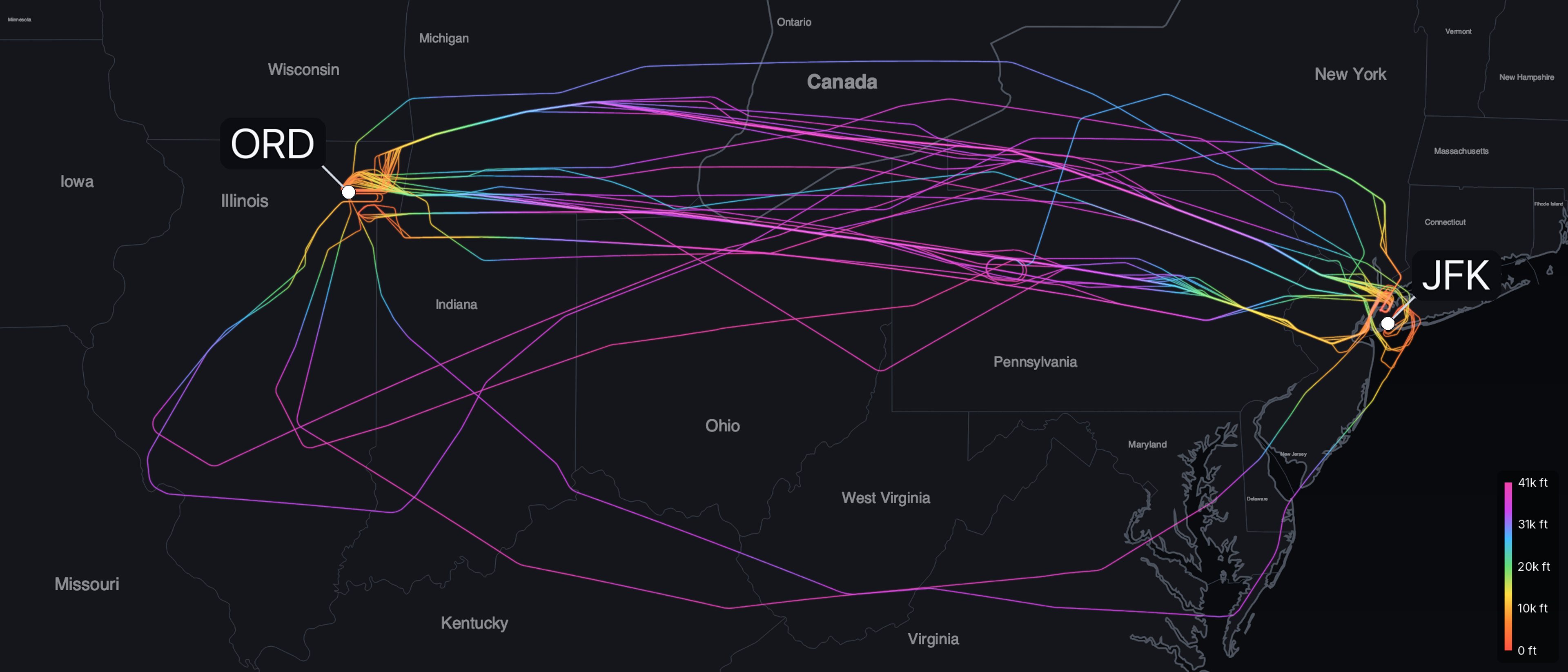
- Distance
- about 1,570 nm
- Type
- Single-engine turboprop
The shape of a week
None of this is visible from the ground. It appears when you take a whole week of tracks and read the shape: the slow flood of arrivals, the fast drain of departures, the daily pulse of mornings out and afternoons in. That shape is the fingerprint of the fly-in, and shapes like it, one real flight at a time, are the raw material behind the prints we make.
The 2026 fly-in drew a record 734,000 people, and we tracked that week the same way: see AirVenture 2026 in 9,803 flight paths. Other events leave their own mark on the sky. After a championship, the private jets drain out of a city in one night: see the private-jet exodus after Super Bowl LX.
Sources
Flight tracks: our own ADS-B render of every arrival and departure touching Oshkosh (KOSH) from July 16 to 28, 2025, via PlaneQuery. The counts are the arrival and departure legs we could track cleanly, not the tower's official operations tally. AirVenture and the world's-busiest-tower staffing, the Fisk arrival and colored-dot procedures, the afternoon airshow closures, and the O'Hare comparison of daily operations: EAA and the FAA. For what the underlying signal is, see what ADS-B actually is.